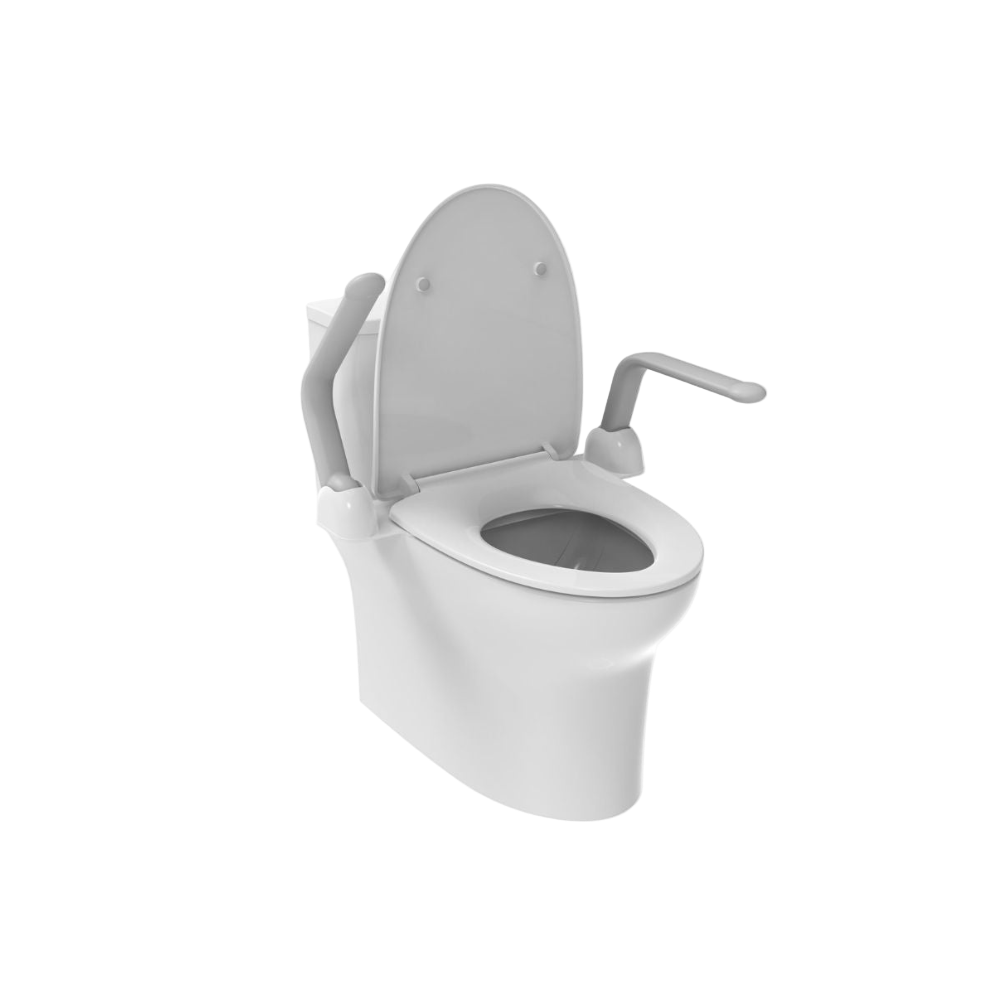
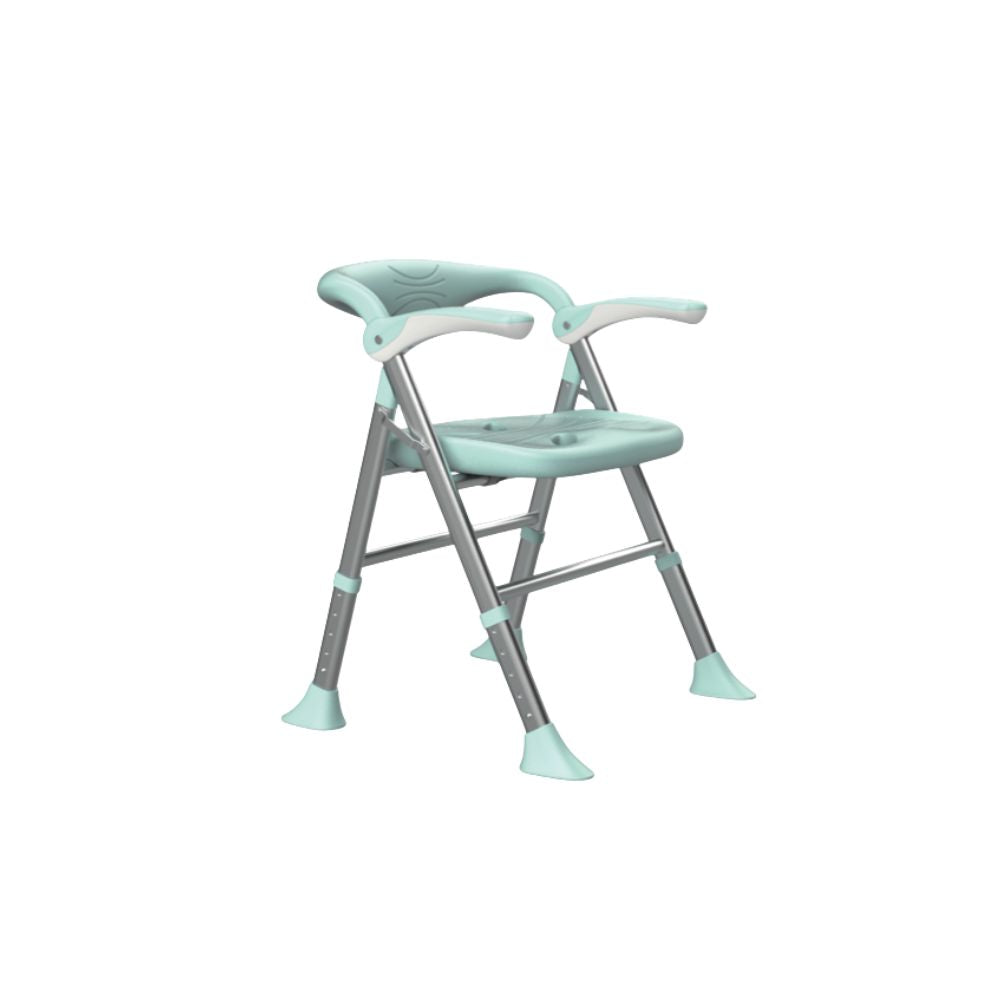
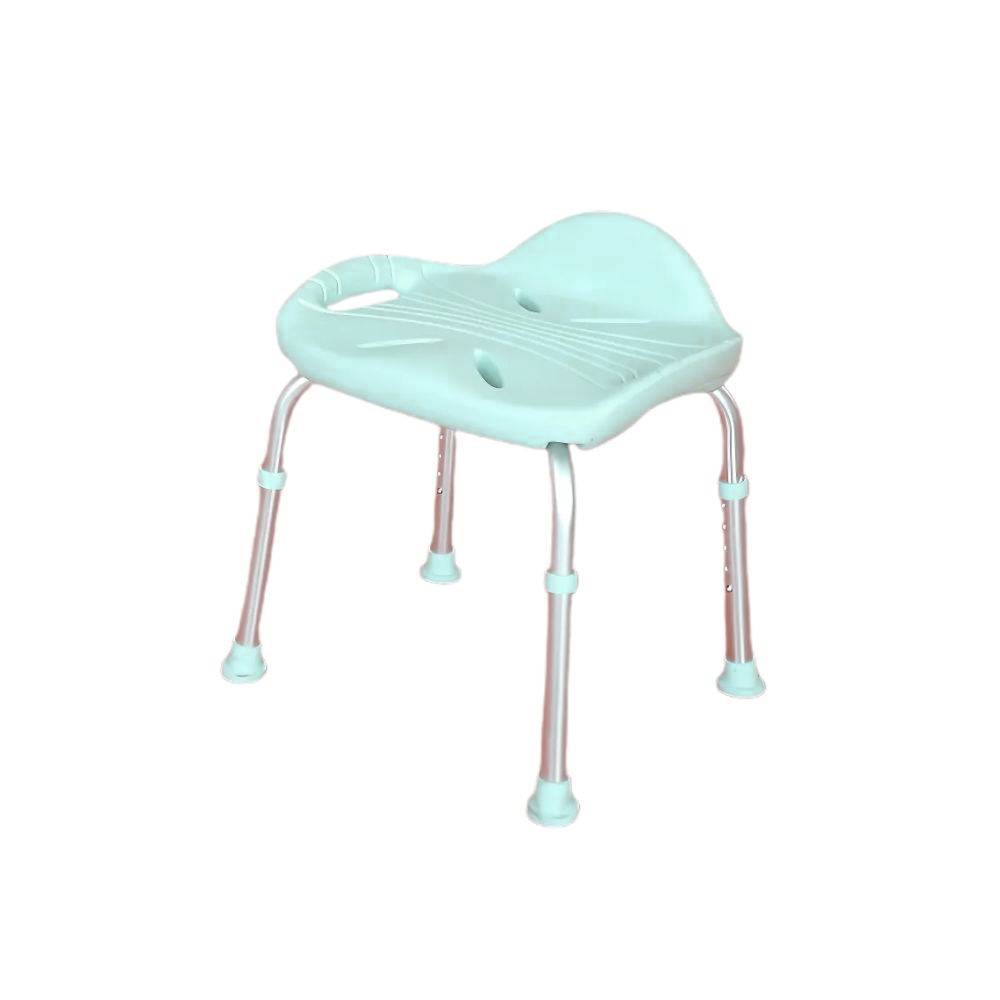


A combined grab rail and shower rail provides stable hand support while holding an adjustable showerhead on the same fixture. It can improve mobility, simplify the shower layout and reduce wall clutter. However, the rail must be designed, positioned and structurally installed as a grab rail, not treated as an ordinary shower slider.
Combined grab rails and shower rails solve two related bathroom needs without adding separate fixtures. The design can make a shower easier to use while standing, sitting or moving between positions. This guide explains the practical benefits, important limitations, Australian compliance considerations and installation decisions that determine whether a combined rail is suitable.
A shower is a demanding environment. The user may be barefoot, surrounded by water and changing position while reaching for controls. A rail that supports movement and carries an adjustable showerhead can improve usability, but only when every part of the system works together.
The distinction between a genuine grab rail and a shower slider is critical. A conventional slider may look sturdy, yet appearance says nothing about its capacity to support a person. Product selection, wall structure, fixing method and placement all matter.
Key takeaways
The main benefit of a combined grab rail and shower rail is functional integration. It places support and showerhead adjustment within the same usable zone. The result can be a cleaner layout and easier showering, although compliance and structural safety must always take priority over appearance or space savings.
- A combined rail can support balance while also carrying an adjustable handheld showerhead.
- It may help users shower while standing, seated or changing between those positions.
- A true combined rail must be intended and tested for grab rail use. A standard shower slider is not an alternative.
- Correct placement depends on the user, shower layout, controls, seat and applicable access requirements.
- Structural fixings must transfer force into suitable wall framing or another approved substrate.
- The showerhead cradle, hose and controls must not block a secure hand grip.
Summary Table
A combined system is not automatically better than separate fixtures. The right choice depends on who uses the shower, how they move and whether the wall can support the required installation. This comparison highlights the practical differences that should be assessed before choosing a product or finalising the bathroom layout.
| Consideration | Combined grab rail and shower rail | Separate grab rail and shower slider |
|---|---|---|
| Wall space | Consolidates support and shower adjustment | Requires space for separate fixtures |
| Visual layout | Creates a simpler arrangement | Can look busier but allows independent placement |
| Showerhead access | Keeps adjustment close to the support zone | Can be positioned independently for reach |
| Grip availability | Accessories may reduce usable gripping space | Grab rail can remain completely unobstructed |
| Installation | Requires grab rail capable fixings and coordinated plumbing | Each fixture can be installed for its specific purpose |
| User customisation | Works well when support and showerhead positions align | Better when the ideal support and showerhead locations differ |
| Future changes | May simplify some bathroom updates | Offers more flexibility to replace either component separately |
What is a combined grab rail and shower rail?
A combined grab rail and shower rail is a load-bearing support rail designed to accept a movable showerhead holder. Unlike a standard shower slider, its primary structure and fixings are intended to resist the forces created when a person grips, pulls or steadies themselves during showering.
The rail normally performs several functions within one assembly:
- It provides a stable handhold.
- It supports a sliding or adjustable showerhead cradle.
- It helps position a handheld showerhead for standing or seated use.
- It can assist controlled movement within the shower area.
The product must be assessed as a complete system. A strong-looking rail is not enough. The mounting points, brackets, wall substrate and accessory design affect whether the rail can safely perform its support function.
The showerhead holder also needs careful consideration. It should move without excessive effort but remain secure when positioned. Its shape should not leave sharp edges, pinch points or awkward obstructions where the user expects to grip the rail.
How does a combined rail improve mobility?
A combined rail can improve mobility by giving the user a predictable support point while placing the showerhead within easier reach. This can reduce unnecessary bending, turning and reaching. It is particularly useful when a person needs to stabilise themselves before adjusting water direction or changing between standing and seated showering.
Mobility is not simply the ability to walk into a shower. It includes entering the wet area, turning, lowering onto a seat, standing again and reaching the showerhead or controls without losing balance.
A well-positioned combined rail may support these movements by giving the user somewhere secure to place a hand. The adjustable showerhead can then be brought towards the user rather than requiring the user to move towards a fixed water outlet.
Consider a person who showers on a folding seat. A fixed overhead shower may be difficult to reach or direct. A handheld showerhead attached to the support rail can remain accessible from the seated position. The same rail may help the person steady themselves when approaching or leaving the seat.
The design can also suit households with different users. One person may prefer an elevated showerhead while standing. Another may lower it for seated showering. This adaptability can make the bathroom more usable without adding several unrelated fittings.
However, placement must follow the user's actual movement pattern. Installing the rail where it looks symmetrical may leave it beyond comfortable reach. The user's dominant side, grip ability, transfer method and preferred shower position should influence the decision.
How can the design improve shower safety?
A combined rail can improve shower safety by providing support at the point where the user reaches for the handheld showerhead. It may reduce unsupported movement and discourage people from gripping taps, screens or ordinary shower fittings. Those components are not necessarily designed to carry body weight or sudden force.
Healthdirect advises that falls can occur when balance, strength, vision, medication or environmental hazards affect a person's stability (Healthdirect). A wet bathroom can combine several of these challenges with slippery surfaces and limited room to recover from a loss of balance.
The safety benefit does not come from the rail alone. A safer shower depends on coordinated design, including:
- slip-resistant flooring suitable for the wet area
- a clear entry without avoidable trip hazards
- reachable water controls
- suitable lighting and visual contrast
- enough circulation space for the intended user
- a shower seat where required
- secure, correctly positioned support rails
A combined rail can remove one common unsafe behaviour: holding the shower slider for support. A person may assume any metal bar fixed to a wall can carry their weight. If the fitting is only attached as a plumbing accessory, that assumption can result in the rail pulling away from the wall.
Clear product identification matters in shared bathrooms, supported accommodation and homes used by visitors. If a fitting resembles a grab rail but is not rated or installed as one, its appearance may create false confidence.
What are the space and layout benefits?
Combining support and showerhead adjustment can reduce the number of fixtures competing for wall space. This is useful in compact showers, where separate rails, controls, shelves and seats can create conflicts. A coordinated system can also make the shower easier to understand by grouping related functions within one accessible area.
Saving wall space is useful, but it should not become the sole design objective. The combined rail still needs clear gripping sections. The hose should hang without wrapping around the rail, crossing an entry path or interfering with a shower seat.
A simpler wall layout can provide several practical benefits:
- fewer fittings around which water and residue can collect
- less visual confusion for users with reduced vision or cognitive impairment
- more freedom to place shelves and controls within reach
- fewer protruding items in a compact circulation area
- a cleaner relationship between the support rail, showerhead and seat
The design may also support future adaptability. A handheld showerhead can serve a standing user now and a seated user later. That does not eliminate the need for future assessment, but it may avoid replacing a fixed shower outlet when a person's needs change.
Separate fixtures remain appropriate when the ideal grab point and showerhead position do not align. For example, a user may require continuous support beside a seat while another wall offers a better location for showerhead adjustment. Forcing both functions onto one rail can make each less effective.
What must be checked for Australian compliance?
Australian compliance depends on the building type, project scope, jurisdiction and intended use of the bathroom. A combined rail used in accessible building work must be selected and positioned against the applicable requirements, rather than assumed compliant because it is marketed as accessible or described as a grab rail.
The National Construction Code sets the broader building requirements adopted through state and territory systems. The relevant NCC edition and provisions depend on the project and approval pathway. The Australian Building Codes Board provides access to NCC editions and supporting resources through the National Construction Code.
For access to premises, AS 1428.1:2021, Design for access and mobility, Part 1: General requirements for access, New building work, contains technical requirements relevant to accessible sanitary facilities. A designer, building surveyor, access consultant or occupational therapist may need to confirm how those requirements apply.
Housing projects may also be affected by the Australian Building Codes Board's Livable Housing Design Standard. Application varies with the project, building classification, jurisdiction and adoption arrangements.
Do not rely on a product label as proof that an entire installation complies. Compliance can depend on:
- rail shape and gripping surface
- location and orientation
- clearance from the wall and nearby fittings
- continuity of usable grip
- structural performance of fixings and substrate
- relationship to the seat, controls and shower entry
- the applicable NCC and referenced standard provisions
Waterproofing must also be protected during installation. AS 3740:2021, Waterproofing of domestic wet areas, addresses waterproofing for domestic wet areas. Penetrations through finished shower walls should be detailed and sealed by competent trades using methods compatible with the wall system and waterproofing design.
What determines a safe installation?
A safe installation transfers user forces through the rail brackets and fixings into a suitable structural substrate. Tiles, plasterboard and wall linings are finishes, not substitutes for structural support. The installer must also preserve waterproofing, follow product instructions and confirm that plumbing or electrical services will not be damaged.
The best time to plan a combined rail is before wall linings are installed. This allows suitable framing, noggings or another specified support system to be placed where the rail will actually be needed.
Retrofitting requires more investigation. The installer may need to identify framing locations, wall construction and concealed services. If adequate support is unavailable at the preferred position, the answer is not to use weaker fixings. The wall may need modification, an approved reinforcement solution or a different rail layout.
Installation planning should cover the following points.
Structural backing
The support behind the finished wall must suit the rail, fixing system and expected use. Product instructions should state acceptable substrates and mounting requirements. If the documentation is unclear, seek written confirmation from the supplier or manufacturer.
Waterproofing
Every penetration in a shower wall needs careful detailing. Poor sealing can allow moisture into the wall assembly. This may damage finishes and framing while weakening the installation over time.
Position and reach
The user should be able to grip the rail without leaning into an unstable posture. The showerhead cradle must also travel through useful positions without colliding with controls, shelves or the seat.
Hose management
The hose should reach the intended standing and seated positions. It should not create an avoidable loop near the floor, catch on the seat or cross the user's main movement path.
Final inspection
The completed rail should feel rigid. Brackets, covers and the showerhead cradle should remain secure during normal adjustment. Installation records and product documentation should be retained, particularly where the work forms part of an accessible or funded modification.
How should you choose a combined system?
Choose a combined system by starting with the user's movement and reach requirements, then checking structural, dimensional and product documentation. Material, finish and appearance matter, but they come after safe grip, suitable showerhead adjustment, installation compatibility and any project-specific access requirements.
Ask these questions before buying:
- Is the product explicitly designed to function as a grab rail?
- What installation substrates and fixings does the manufacturer permit?
- Does the showerhead holder leave enough uninterrupted gripping area?
- Can the holder be adjusted by someone with limited hand strength or dexterity?
- Will the showerhead reach both standing and seated positions?
- Does the hose interfere with the rail, seat, controls or entry?
- Is the surface comfortable and secure to grip when wet?
- Can replacement holders, hoses and showerheads be obtained?
- Will the finish tolerate the cleaning products used in the bathroom?
- Has a relevant professional reviewed the position where individual access needs are involved?
Stainless steel is commonly used for bathroom support products because it can provide strength and corrosion resistance when the appropriate grade and finish are specified. However, material alone does not prove suitability. Joint design, bracket construction, manufacturing quality and maintenance access remain important.
Avoid judging the product only by how much weight a marketing page says it can hold. A stated capacity may be based on test conditions that differ from the proposed wall. Safe performance depends on the whole installed assembly.
When are separate rails the better option?
Separate fixtures are better when the user needs support in a location that does not suit showerhead adjustment. They may also be preferable when uninterrupted gripping space, independent replacement or a broader range of showerhead positions matters more than reducing wall fittings. Integration should improve use, not dictate it.
A separate grab rail and slider can be the better arrangement when:
- the user needs support on more than one wall
- a seat requires a rail beside it, but the showerhead is best placed opposite
- the shower is shared by people with very different reach requirements
- the combined cradle would obstruct the most important grip area
- plumbing constraints prevent the hose from hanging safely
- an existing compliant grab rail should remain undisturbed
- maintenance staff need to replace shower fittings without affecting the support rail
There is also a behavioural consideration. Moving the showerhead holder may temporarily occupy the section of rail a user normally grips. If that creates hesitation or forces an awkward hand position, separate fittings may be clearer and safer.
An occupational therapist can assess individual movement, transfers and reach. An access consultant can advise on technical access requirements. A licensed builder or suitable installer can assess the wall structure and construction method. These roles overlap, but they are not interchangeable.
The overlooked benefit is predictable hand placement
The strongest case for a combined rail is not that it saves space. It is that the design can place support exactly where a user performs another demanding task. Adjusting a showerhead often involves reaching, looking upwards or sideways and using one hand. A properly planned rail gives the other hand a predictable support point.
This is the practical distinction many product comparisons miss. They treat the rail as a compact fixture rather than part of a movement sequence.
A better design process maps the user's actions in order:
- enter the shower
- reach the controls
- adjust the water temperature
- position the showerhead
- stand or sit
- wash and turn
- stand from the seat if used
- leave the wet area
The rail should support the difficult moments within that sequence. If the combined fixture only looks tidy but does not help during those moments, it is solving the wrong problem.
My view is direct: never choose a combined system merely to make an accessible bathroom look less clinical. Good accessible design can be visually resolved, but disguising function should not weaken it. The best system makes support obvious, reachable and dependable while keeping the showerhead easy to control.
For help selecting a suitable configuration, visit Avail Designs' Contact page at /contact. Provide the shower layout, wall construction and intended user requirements so the discussion can begin with practical constraints rather than appearance alone.
References
- These sources provide the Australian building, access, waterproofing and general falls context relevant to combined grab rail installations. Standards and regulatory requirements should be checked against the project's jurisdiction, approval date and building classification. Product instructions and professional advice remain necessary because these references do not determine suitability for a specific wall or user.
- Australian Building Codes Board, National Construction Code.
- Australian Building Codes Board, Livable Housing Design Standard.
- Standards Australia, AS 1428.1:2021, Design for access and mobility, Part 1: General requirements for access, New building work.
- Standards Australia, AS 3740:2021, Waterproofing of domestic wet areas.
- Healthdirect Australia, Falls.


