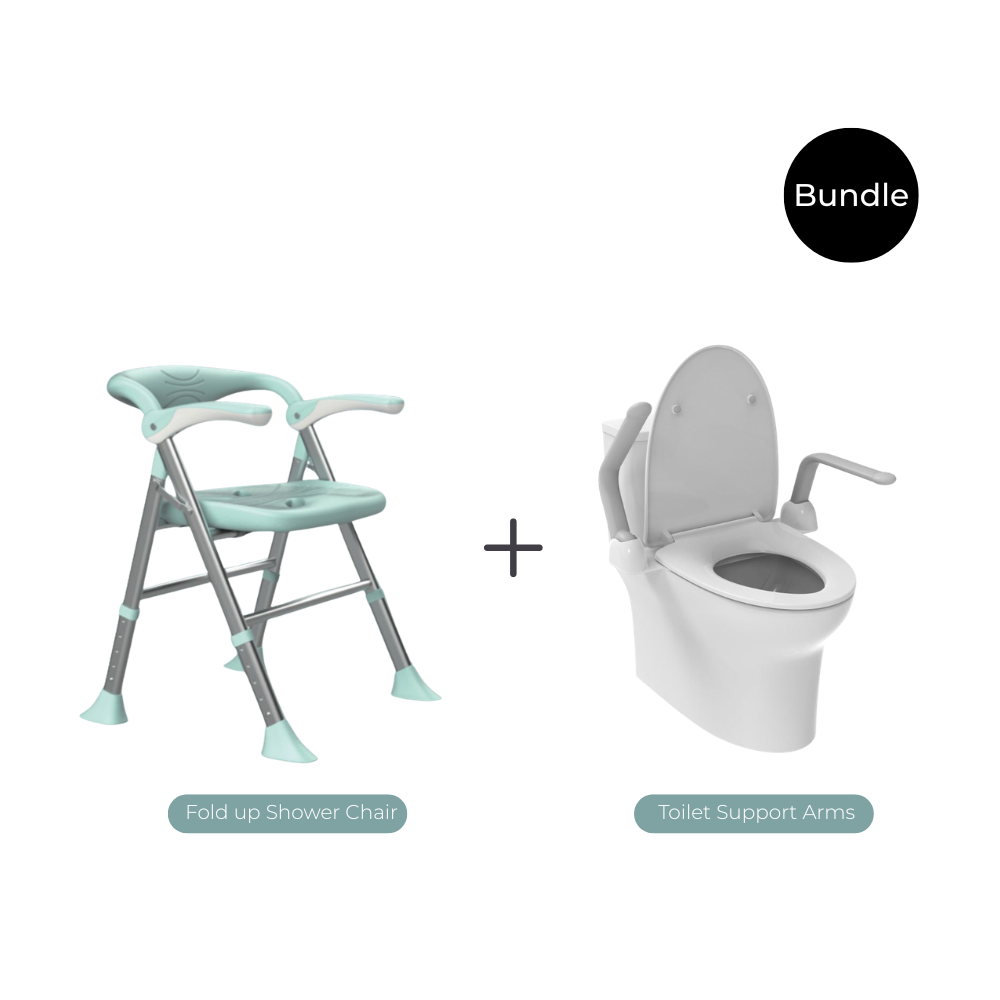


Choose a wall-mounted fold-down shower seat when the wall has solid timber or masonry backing, the shower is small, and other household members need the space clear. Choose a freestanding shower chair when you're renting, the wall can't be drilled safely, or you need a seat that moves between the shower and elsewhere in the home.
A shower seat is one of the simplest additions to an accessible bathroom, but the wall-mounted versus freestanding decision gets made too casually. Get it wrong and you end up with a seat that wobbles, blocks the door, or can't be fitted at all because the wall behind the tiles is hollow sheet, not solid backing. According to the Australian Institute of Health and Welfare (AIHW), falls are a leading cause of injury hospitalisation among older Australians, and bathrooms consistently rank among the higher-risk rooms in the home, largely because wet, hard surfaces combine with the physical demand of standing to wash.
This guide walks through both options side by side: floor space, fixing requirements, cost, renter suitability, weight capacity, and how seating fits into the rest of an accessible shower, including grab rails and hand shower position. By the end you'll know which seat suits your bathroom, and what to check before you buy.
Key takeaways
- Wall-mounted fold-down seats save floor space and suit permanent, owner-occupied bathrooms with solid wall backing behind the tiles.
- Freestanding shower chairs suit renters and anyone who can't drill into tiled walls, and fold-up designs store away flat when the shower needs to be clear.
- Seat height, knee clearance and weight rating matter more than style: get these wrong and the seat becomes the hazard it was meant to remove.
- Seating should be planned alongside grab rails and hand shower position, not chosen in isolation and bolted in wherever it fits.
- A seat that's tilted to shed water dries faster than a flat one, and with no slots there's nowhere for mould to grow.
- Seated showering removes the balance demand of standing on a wet surface, which is why occupational therapists commonly recommend it for clients with reduced strength or balance.
Summary Table
| Factor | Wall-Mounted Fold-Down Seat | Freestanding Shower Chair/Stool |
|---|---|---|
| Fixing required | Yes, into a stud, noggin or masonry anchor | No drilling, sits directly on the shower floor |
| Floor space when idle | Folds flat against the wall | Sits on the shower floor; fold-up models fold flat and store away |
| Best suited to | Owner-occupied homes, long-term or worsening needs | Rentals, temporary needs, or needs that may change |
| Portability | Fixed permanently in one position | Moves between the shower and other rooms |
| Typical cost profile | Higher upfront, includes professional fixing | Lower upfront, no installation labour |
| Weight rating to check | Bracket, fixing points and wall structure combined | Leg frame, feet and seat material combined |
| Tipping or slip risk | Low once correctly fixed | Low with feet rated for wet, sloped tile |
| Pairs with | Grab rails fixed at the same wall studs | Grab rails fixed independently of seat position |
The Short Answer: Matching the Seat to Your Bathroom
The right shower seat depends on four things: whether the wall behind the tiles can take a structural fixing, how much floor space the shower has, how stable the user is on their feet, and whether you own or rent the property. Wall-mounted suits permanent, owned bathrooms; freestanding suits renters and small or awkward spaces.
In practice, most Australian bathrooms fall into one of two categories. Older brick veneer or timber-framed homes usually have solid backing somewhere behind the shower tiles, which makes wall-mounted seating straightforward once a tradesperson locates a stud or noggin. Newer apartments and townhouses more often use lightweight stud walls sheeted close to the wet area, or tiled masonry with no accessible backing at all, which pushes the decision towards a freestanding chair, or a purpose-fitted backing plate installed as part of a retrofit.
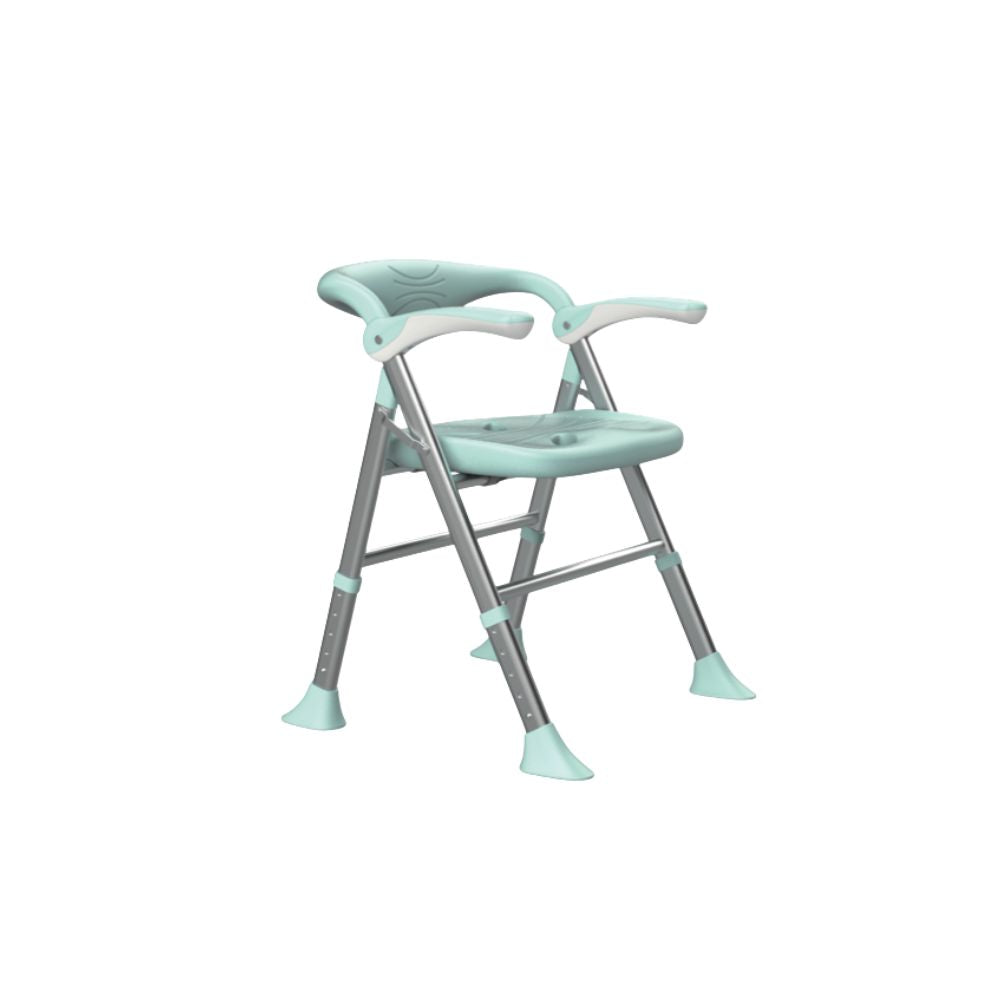
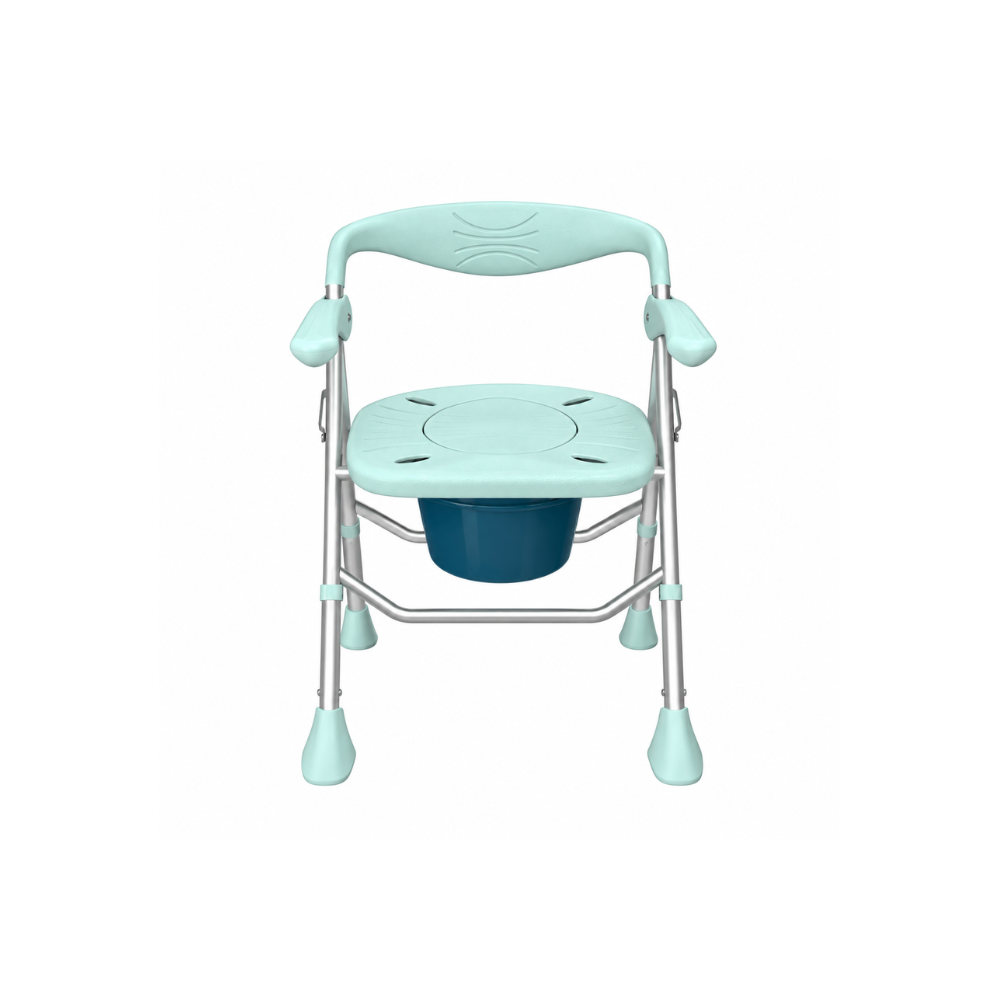
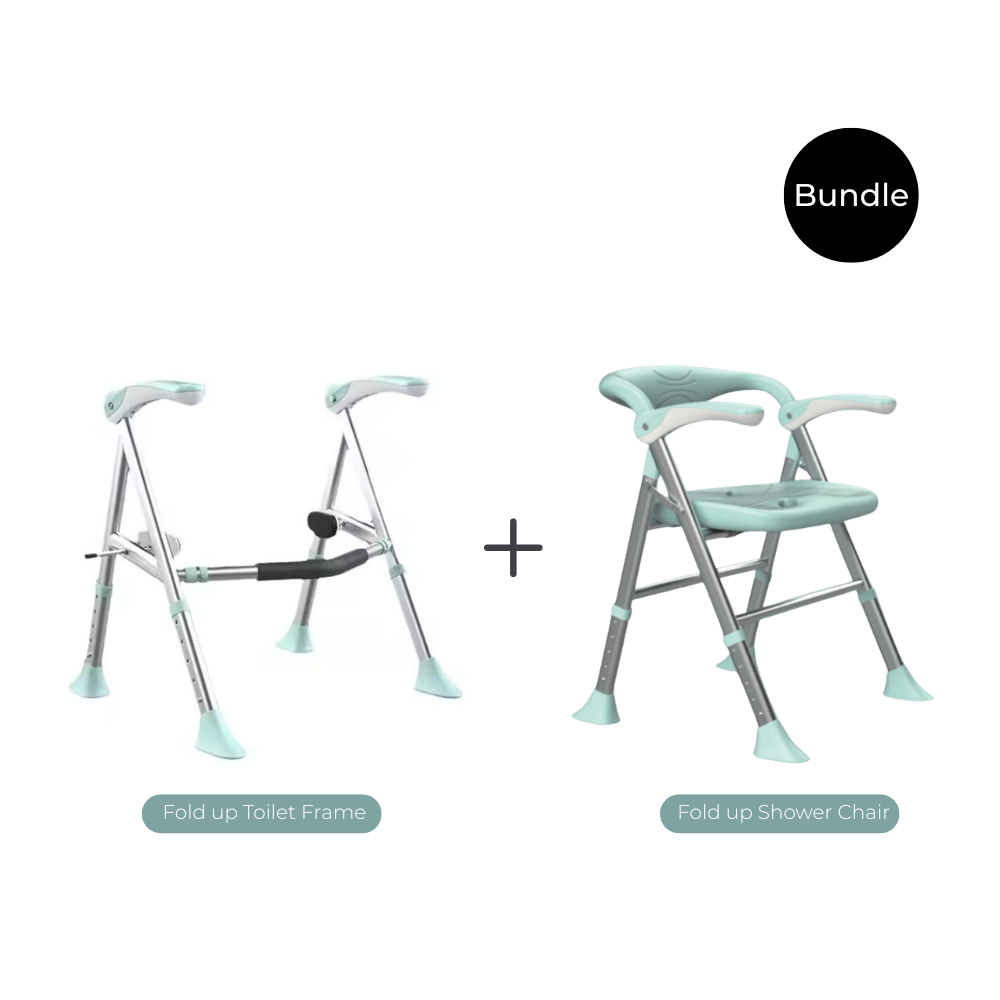
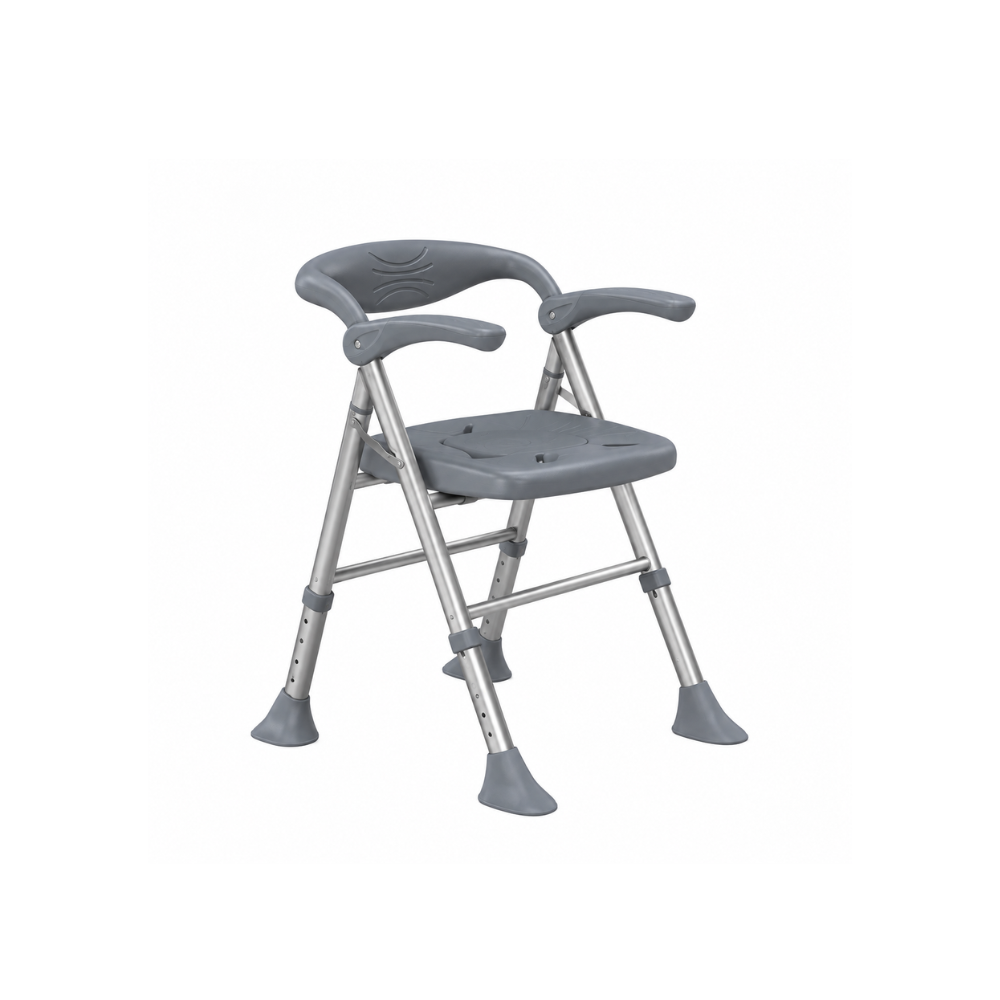
Floor space is the second filter. In a shower recess under roughly 900mm square, a chair left standing in place can crowd the door swing or the drain. Two options solve it: a wall-mounted fold-down seat that lifts flush against the tiles, or a portable chair that folds up and stores away between showers, like Avail's fold up shower chair.
Stability is the factor most people underweight. Someone who needs a backrest and armrests to push up from a seated position needs a seat that will not move, slide or tip under load. A wall-mounted seat, correctly fixed, cannot tip. A freestanding chair can, particularly on a shower floor with a fall toward the drain, unless it has properly rated non-slip or rubber ferrule feet.
Ownership status decides the rest. Renters generally cannot drill into tiled walls without risking their bond, and property managers or body corporates are often slow to approve permanent fixings. A freestanding shower chair needs no approval and travels with the tenant when the lease ends.
Wall-Mounted Fold-Down Shower Seats: How They Work and When They Fit
A wall-mounted fold-down shower seat bolts into the wall structure and folds flat when not needed, keeping the shower usable for other household members. It pairs naturally with grab rails fixed at the same points, but it needs a noggin, stud or masonry anchor behind the tiles, not a hollow sheet of plasterboard.
A fold-down seat is the seat of choice for a bathroom that gets shared. If a household includes one person who showers seated and others who shower standing, a wall-mounted seat lets the second group use the full shower floor once the seat is folded up. This matters most in family homes where one parent needs seated support but the shower also serves a partner or teenagers.
The fixing is the part that gets skipped in a rushed installation, and it's the part that causes the most call-backs. A fold-down seat, especially one rated for a higher weight, transfers real load onto whatever it's screwed into. Waterproof membrane, tiles and a standard plasterboard sheet will not hold that load safely on their own. The bracket needs to reach a timber stud or noggin in a timber-framed wall, or a rated masonry anchor in a brick or besser block wall. In a new build or renovation, the smart move is having the builder install a solid timber noggin, or a marine-grade plywood backing panel, behind the tiles at the seat and rail locations before waterproofing goes on.
Retrofitting into an existing tiled wall without that backing means either finding an existing stud with a stud finder, or accepting a more invasive job that involves removing tiles to fit a proper backing plate. We've covered exactly this scenario, and the retrofit kits built for it, in more detail in a dedicated article on retrofitting accessible shower kits. The short version: a fold-down seat is only as strong as what's behind the tile, so this step is never optional.
Because a wall-mounted seat is fixed permanently, it also sets the layout for everything else in the shower. Grab rails are usually specified to land within reach of the seated position, and the hand shower rail or riser needs to reach someone sitting down, not just someone standing. Getting the seat position right first makes the rest of the layout easier to get right the first time.
Freestanding Shower Chairs and Stools: Portable and Renter-Friendly
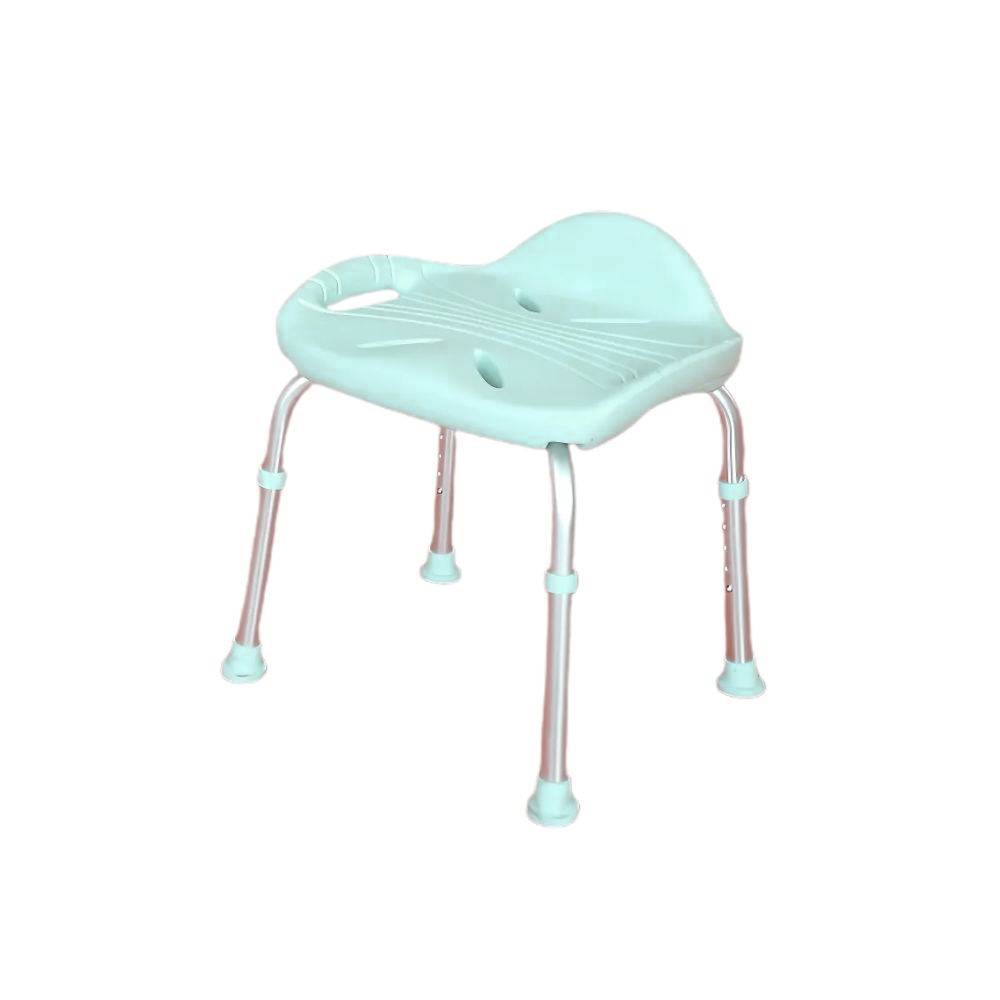
A freestanding shower chair or stool needs no wall fixing, so it suits renters, older tiled walls with no solid backing, and anyone who wants to move the seat between the shower and another room. A fold-up design stores away when the shower is shared, and the feet should be rated for a sloped, soaped tile floor.
Freestanding chairs and stools range from simple three or four-legged stools to chairs with backrests, armrests and height-adjustable legs. The adjustable leg feature matters more than it looks: it lets the seat height match the user's knee height rather than forcing a compromise, and it means the same chair can suit different users in the same household over time.
Portability is the headline benefit. Consider a renter in a Melbourne apartment who needs seated support after hip surgery but cannot drill into the bathroom's tiled walls without risking their bond, and whose body corporate would take weeks to approve any permanent fixing regardless. A freestanding shower chair solves the problem in an afternoon: no approval, no trade booking, no holes in the tile. When the lease ends, the chair moves out with them. A fold-up chair such as Avail's fold up shower chair (S03C1G, in stock mid October) adds one more advantage: it folds flat, so it can be put away when someone else needs the shower.
There are two things to check. First, floor space: a chair left in the recess reduces usable floor area for anyone showering standing afterwards, which is why a fold-up chair that stores away suits a shared shower. Second, the feet: on a shower floor with a fall toward the drain, a chair without properly rated non-slip or rubber ferrule feet can slide under load, particularly when someone transfers their weight onto an arm or the seat edge. Check the feet are rated for wet-area use specifically, not just generic rubber caps sold with the frame.
Sizing and Safe Use: Seat Height, Clearance and Weight Ratings
A shower seat needs to sit at a height where the user's knees form close to a right angle with feet flat on the floor, with clear space in front for a walking frame or carer to stand, and a weight rating checked against the heaviest person likely to use it, not an average adult.
Seat height that's too high leaves feet dangling and reduces stability; too low makes standing back up harder and increases strain on the knees and hips. The practical test is simple: with the user seated, feet should sit flat on the shower floor with the knee close to a right angle. Height-adjustable freestanding legs make this easy to fine-tune on site. Fixed wall-mounted seats need the height decided and specified before installation, which is another reason to involve someone who has actually assessed the user, rather than defaulting to a standard height off a spec sheet.
Clearance in front of the seat matters as much as the seat itself. Someone using a walking frame needs enough clear floor to bring the frame in, turn, and sit down without it catching the shower screen or hob. A carer assisting a transfer needs standing room beside the seat, not just in front of it. Seat clearance, rail position and door swing all have to be planned together, not seat first and everything else after, which is the exact overlap covered in dedicated articles on retrofit shower kits and grab rail layout.
Weight ratings are published by manufacturers for both wall-mounted brackets and freestanding frames, and they're not interchangeable between products. A seat rated for a higher weight might use a stronger bracket, thicker frame tube or additional fixing points than a lighter-rated equivalent that looks identical from the front. The rating that matters is the one specific to the exact seat and fixing being installed, checked against the heaviest person who will realistically use it over the seat's lifetime, including a carer briefly sharing the load during a transfer. This is a detail worth confirming directly with the supplier rather than estimating from a similar-looking product online.
Non-slip feet or rubber ferrules deserve a specific mention because they're the cheapest part of a freestanding seat and the easiest to overlook. Ferrules degrade with repeated wetting and drying, and a ferrule that gripped well when new can harden and slip after a year or two of daily use. Checking and replacing worn ferrules costs very little and removes one of the more common causes of a shower chair sliding mid-transfer.
Planning Seating With Grab Rails and Hand Showers
Seat position should be decided before rail and hand shower placement, not after, because the direction someone transfers into the seat and the reach they have while seated determine where a grab rail needs to land and how far a hand shower hose needs to extend.
Transfer direction is the starting point. Someone stepping sideways from a wheelchair or standing frame needs a rail positioned to support that specific movement, usually on the side they lead with. Someone lowering straight down onto a fold-down seat needs a rail to grip while lowering and rising again, positioned close enough to reach without leaning. Getting this sequence backwards, choosing rail positions first and fitting the seat wherever it happens to land, is a common mistake, and it's the reason a lot of installed seating still leaves users reaching awkwardly for a rail that's just out of comfortable range.
Reach from a seated position is smaller than reach standing, and it's easy to overestimate. A hand shower riser rail or hose length that comfortably reaches a standing user at chest height might sit well out of reach for someone seated, particularly if they also have limited shoulder movement. The seat's height and its distance from the wall both change what "within reach" actually means in practice. This is exactly the kind of detail covered in more depth in a dedicated article on accessible hand shower placement, and it's worth treating rail layout as its own planning exercise too, which is why we've written separately on T-bar grab rail layouts and the combined benefits of grab rail and shower rail systems that share a single fixing point.
The practical sequence for a new or retrofit installation is: confirm the user's transfer method and seated reach, position the seat, then position rails and the hand shower fitting around that seat. Reversing the order means retrofitting rail positions around a seat that's already fixed, which is harder, more expensive, and sometimes impossible if the studs don't line up with where the rail actually needs to go.
Maintenance, Drainage and Hygiene
Shower seats should shed water rather than hold it, be made from corrosion-resistant material such as marine-grade stainless steel, aluminium or solid HDPE plastic, and be left to dry fully between uses to limit mould and mildew growth in a room that's already humid.
A flat seat holds a shallow pool of water after every shower, and that pooled water sits against skin, seat fixings and the wall behind it. Avail's shower seats are tilted instead, so water drains off the seat, and with no slots in the surface there's nowhere for mould to grow.
Material choice affects both hygiene and lifespan. Marine-grade stainless steel, commonly specified as 316-grade for wet areas, resists corrosion far better than standard steel, which matters given a shower runs hot and humid with soap and chlorine residue in the water. Aluminium frames are lighter and also corrosion-resistant, which suits a freestanding chair that gets moved regularly. Solid plastics such as HDPE won't corrode at all, though they can flex more under load than metal, so the weight rating still needs checking against the specific product rather than assumed from the material alone.
Day-to-day maintenance is straightforward but easy to skip: wipe the seat down if soap scum is visible, check wall fixings on a mounted seat periodically for any looseness, and inspect freestanding chair feet or ferrules for wear every few months. None of this takes long, but a seat that's never checked is a seat that eventually fails at the worst possible moment, mid-transfer.
Why We Specify the Seat Last, Not First
Most people, and honestly most bathroom retailers, choose the seat first and work backwards from there. In our experience specifying accessible bathrooms, that sequence causes more rework than any other single decision in the job. The seat is the easiest part to get right in isolation and the hardest part to fix once rails and the hand shower are already fixed around it.
The shower seat is not a stand-alone product, and treating it as one is the single biggest planning mistake we see repeated across Australian bathrooms, in both new builds and retrofits. A seat bought off a shelf or a website, then fitted wherever there happens to be a stud, often ends up positioned without regard for transfer direction, rail reach or hand shower position. The seat itself might be perfectly good hardware. The layout around it is what fails the user.
Our approach is the reverse: map the transfer, confirm the user's seated reach, then choose the seat type, wall-mounted or freestanding, based on wall structure and floor space, and only then finalise rail and hand shower position around that seat. It's a slower first step, but it removes the expensive second step of relocating a rail or seat once tiling and grout are already in place. If you're planning seating alongside rails and a hand shower for the first time, that sequencing is worth getting right before anything gets fixed to a wall.
References
- Australian Institute of Health and Welfare (AIHW), Injury in Australia, including falls hospitalisation data for older Australians (aihw.gov.au)
- Standards Australia, AS 1428.1 Design for Access and Mobility, covering accessible fixture and fitting requirements (standards.org.au)
- Livable Housing Australia, Livable Housing Design Guidelines (livablehousingaustralia.org.au)
- healthdirect Australia, information on falls prevention in the home (healthdirect.gov.au)


