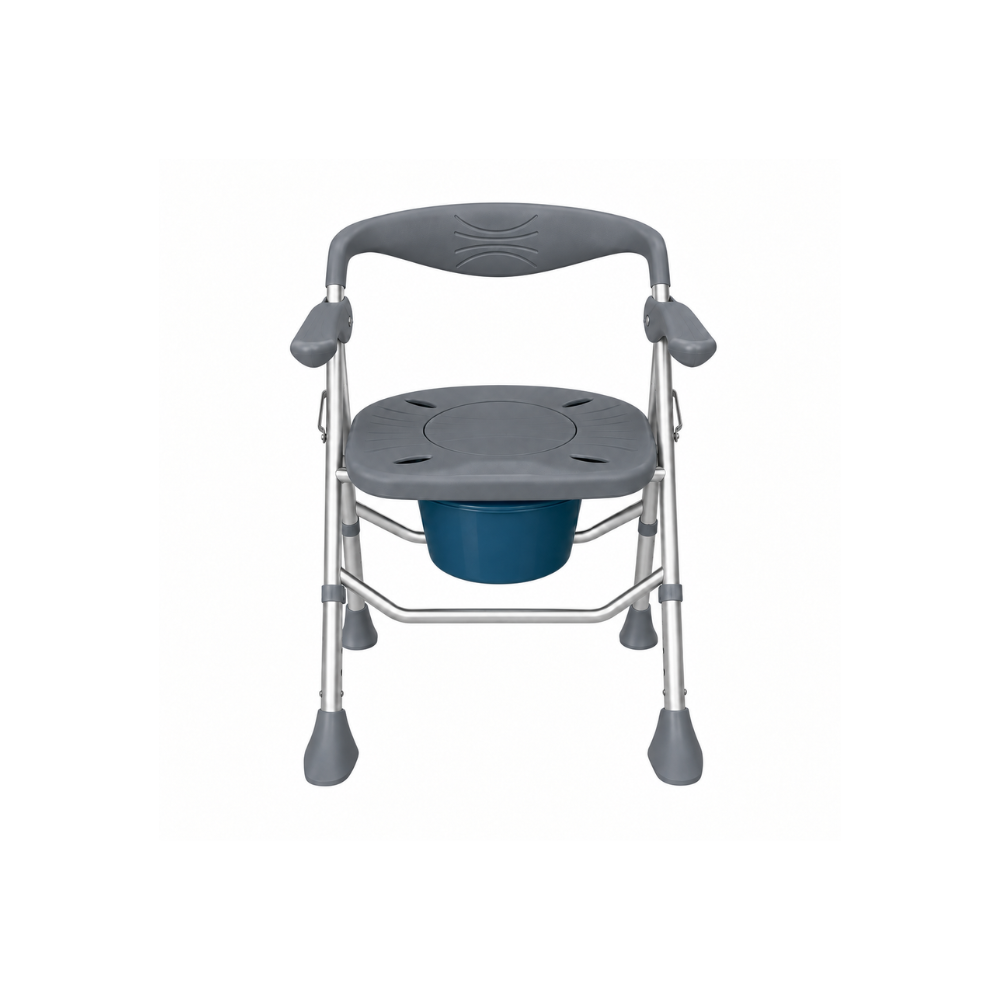
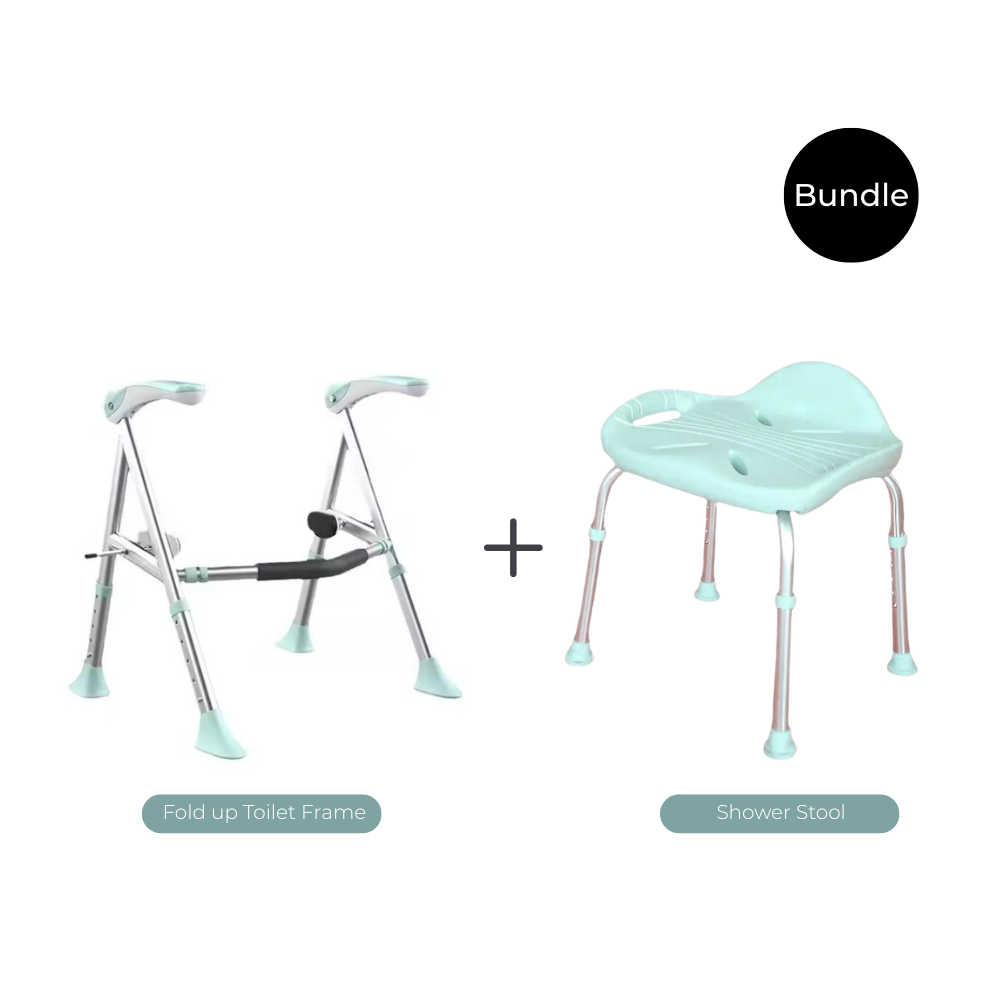
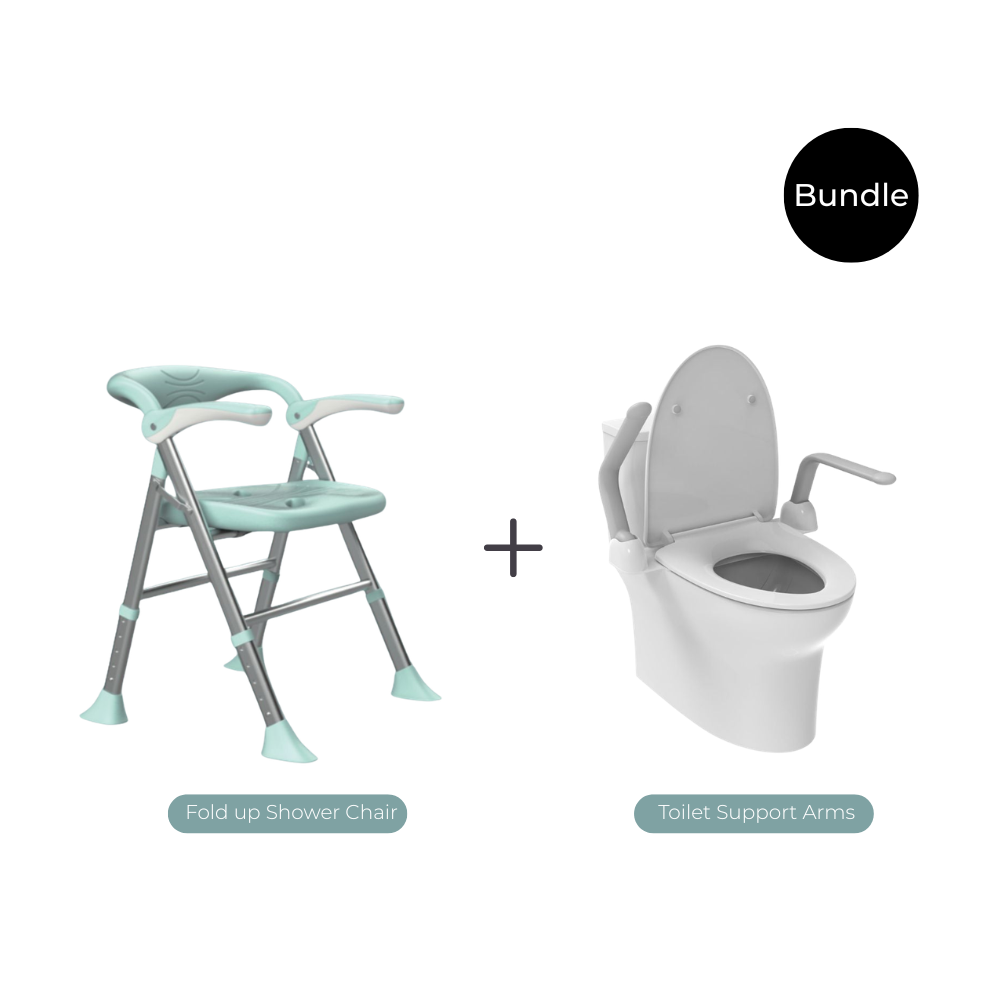


A shower commode is a wheeled chair with a cut-out seat and pan that lets someone toilet and shower in one product. A shower chair is a seat for showering only. If the user can transfer and stand briefly, a shower chair or fold-down seat plus toilet support arms is usually safer and easier to clean.
Most people who search "shower commode vs shower chair" are really asking a bigger question: can one product handle both toileting and showering? Sometimes it can. More often, a bathroom set up around a good seat, solid support at the toilet and well-placed grab rails gives the user more independence and a cleaner, more dignified routine.
This guide explains the practical difference in plain terms, walks through the decision factors, and shows how to build a combined toileting and showering setup without a commode. It also says honestly when a commode is the right call, and why an occupational therapist (OT) assessment matters in those cases.
Key takeaways
- A commode has wheels, a cut-out seat and a pan. A shower chair or seat has none of these and is built for washing only.
- If the person can stand, pivot and sit with some support, a shower seat plus toilet support arms and grab rails usually works better than a wheeled commode.
- A mobile commode suits people who cannot transfer safely on their own, especially for bed-to-bathroom use, and it should be chosen with an OT.
- A wheeled commode needs a step-free shower and enough turning space. Many existing bathrooms cannot provide both.
- Fixed or fold-up seating is easier to keep clean than a pan-and-wheels unit, and it keeps the toileting routine at an actual toilet.
- Fold-up chairs and fold-down seats solve most space problems. Freestanding chairs remain the most popular choice for good reason.
Summary Table
| Factor | Shower commode | Shower chair or seat with toilet support |
|---|---|---|
| Main job | Toileting and showering in one wheeled unit | Showering seat, with toileting handled at the toilet |
| Best for | Little or no standing ability, high-care needs | Can stand and pivot, tires easily, needs steady support |
| Bathroom access | Needs step-free entry and turning room | Works in many layouts, including compact bathrooms |
| Carer involvement | Often needs a carer to push and position | Often allows more independent use |
| Hygiene | Pan and frame need regular cleaning and drying | Simple wipe-down, especially on a smooth, non-slotted seat |
| Permanence | Mobile and removable | Wall-mounted, fold-up or portable, depending on the user |
| Dignity and independence | Can feel clinical and dependent | Closer to a standard bathroom routine |
What is the difference between a shower commode and a shower chair?
A shower commode is a wheeled chair with a cut-out seat and a removable pan, so it can roll over a toilet or sit in a shower. A shower chair or seat has no pan. It comes as a wall-mounted seat, a fold-up chair or a freestanding chair, and it supports the user for washing only.
What a shower commode actually is
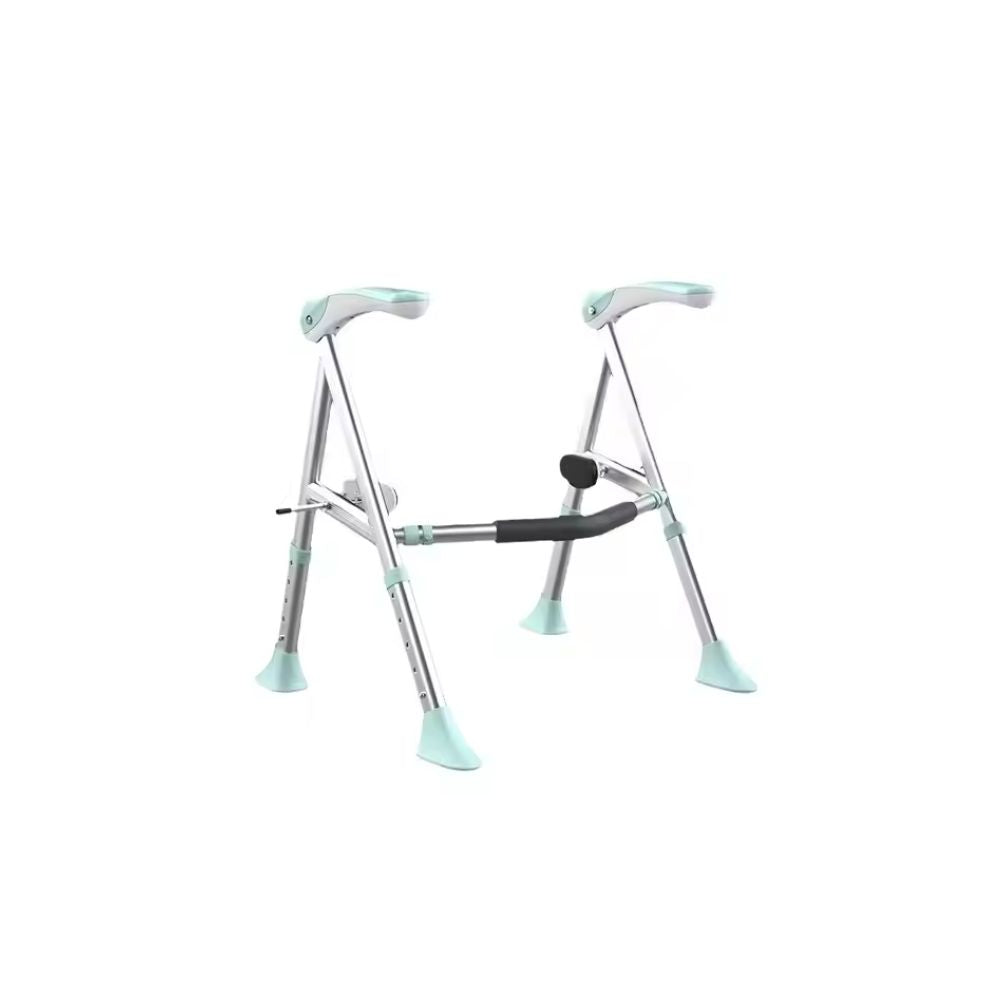
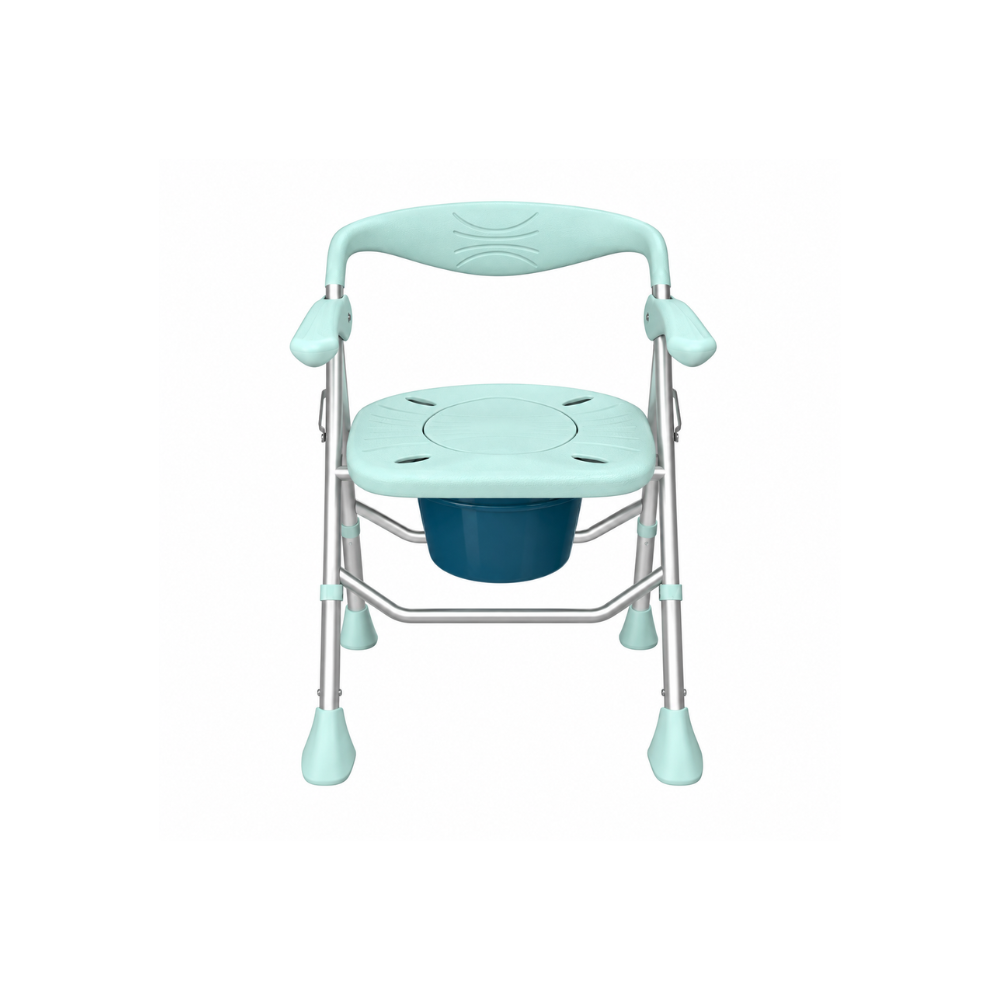
A shower commode combines three things: a frame with castors, a seat with an opening, and a pan or bucket that sits beneath the opening. The wheels let a carer push the user from bedroom to bathroom, then over a toilet or into a shower. Many models have armrests, a backrest and brakes on the castors.
The wheels are the defining feature. They are also the reason a commode needs a certain kind of bathroom. A hobbed shower, a bathroom door that is too narrow or a tight floor plan can stop a commode before it gets to where it is needed.
What a shower chair or shower seat is
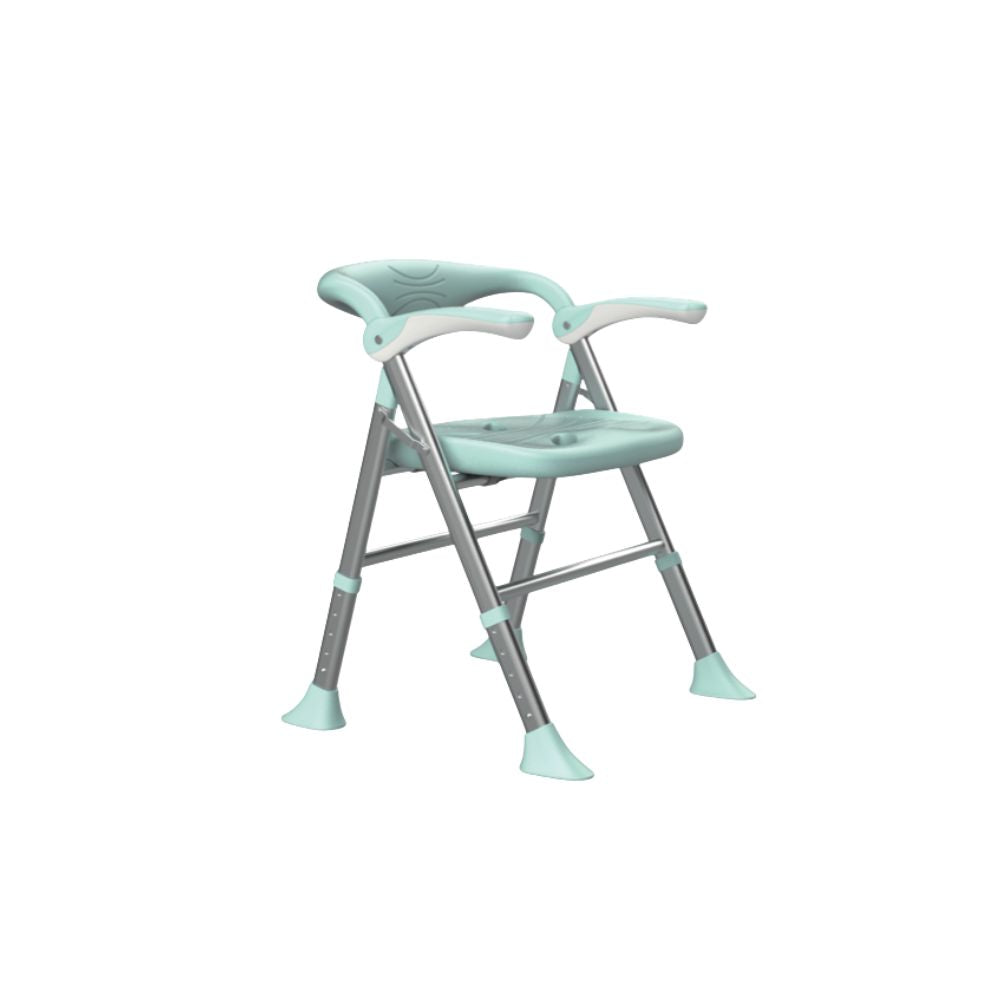
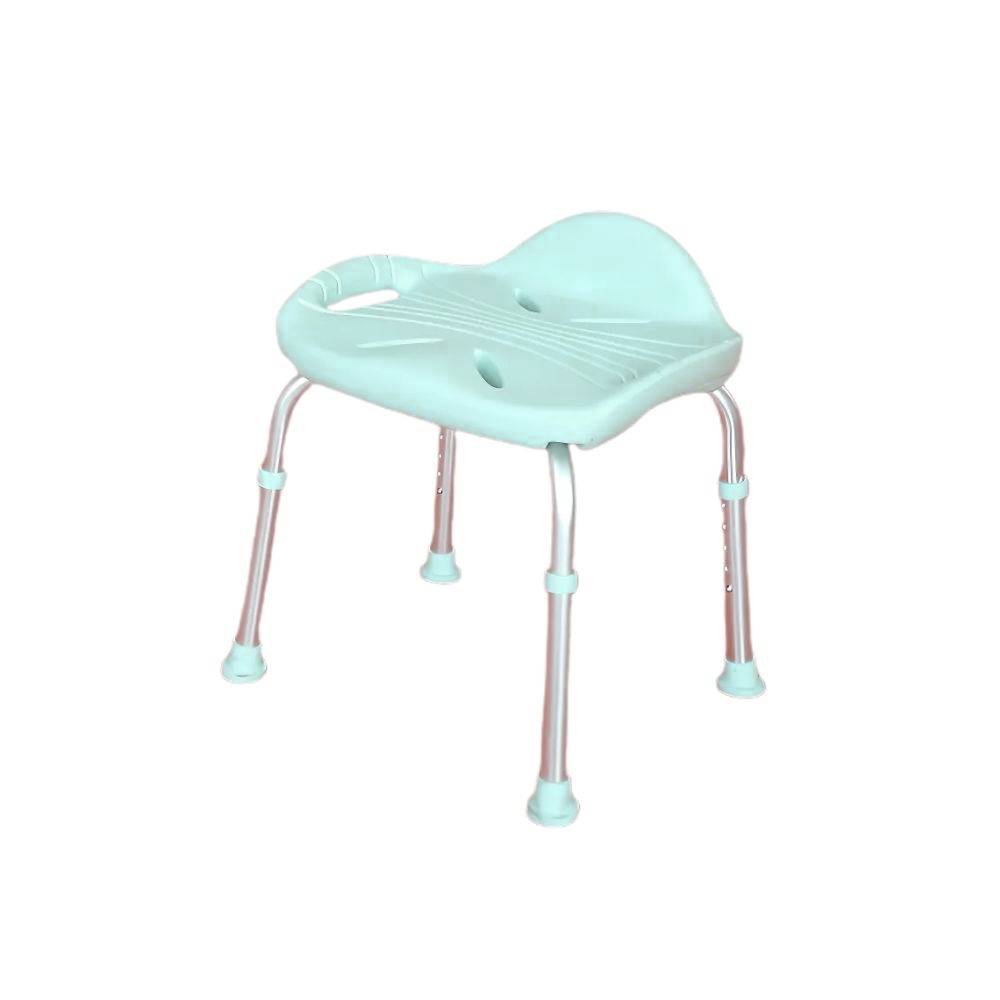
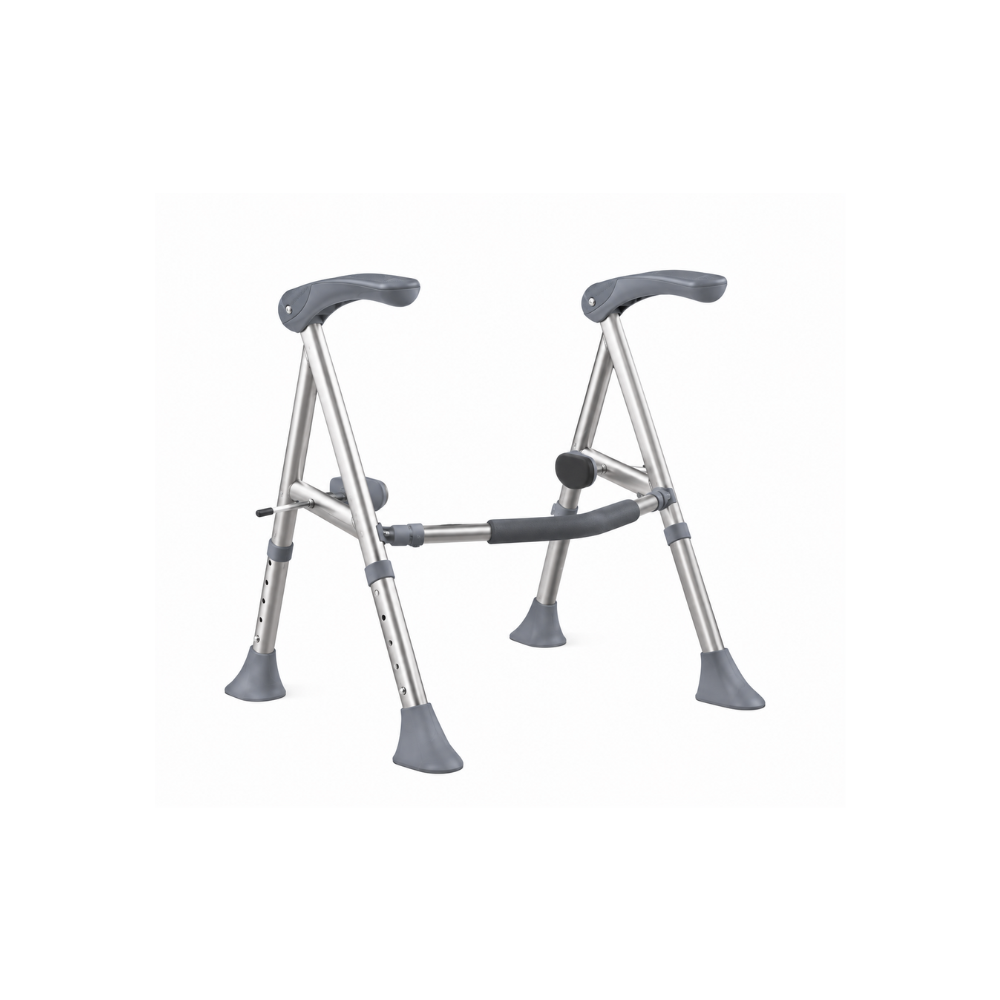
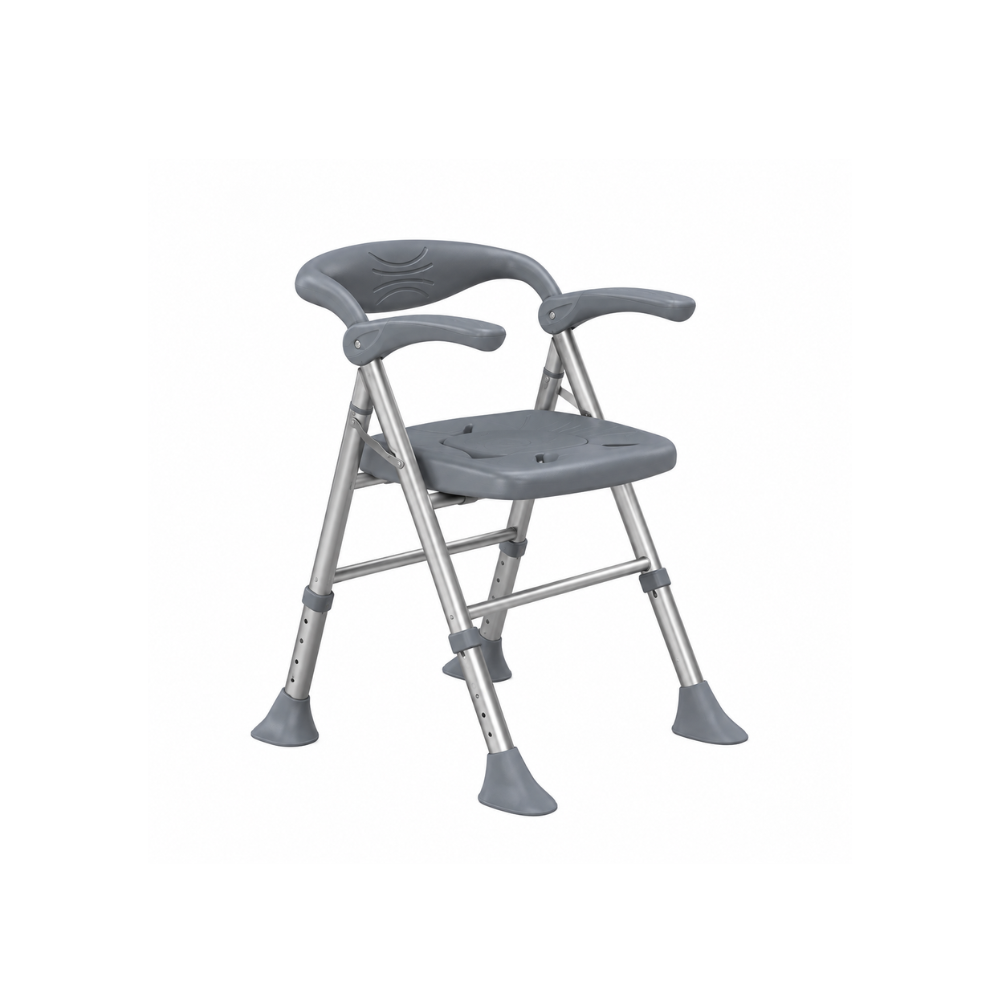
A shower chair or seat is built for one job: giving the user a stable place to sit while washing. It has no pan and usually no wheels. Options include a wall-mounted fold-down seat, a fold-up chair that stores away, and a freestanding or portable chair that sits on the shower floor.
The seat itself matters for hygiene. Avail's shower seats have no slots. The seat is tilted so water drains off, and with no slots there is nowhere for mould to grow. That makes cleaning a quick wipe rather than a scrub.
Bedside, shower and 3-in-1 commodes
You will see several commode types sold in Australia, and the names cause confusion:
- Bedside commode: a fixed-leg chair with a pan, used next to the bed, usually at night. It is not designed to get wet.
- Shower commode: wheeled, with a frame and seat suited to wet areas, so it can be used over a toilet or in a shower.
- 3-in-1 commode: a bedside commode that can also act as a raised toilet seat or a toilet frame over an existing toilet.
The name "shower commode chair" is often used loosely for the wheeled version. Whichever name you see, check whether it is intended for use in water. A bedside commode is not a shower product.
How do you decide between a shower commode and a shower chair?
Decide on six factors: how well the person transfers, continence needs, whether the shower is step-free, available space, how much carer help is on hand, and how easily the equipment can be cleaned. Transfer ability matters most. Someone who can stand and pivot often does not need a wheeled commode.
Transfer ability
Start with what the person can do today, not what they could do on a good day. Can they stand from a seat with support? Can they take two or three small steps? Can they hold a rail while turning?
If the answer is yes, even with effort, a seat plus rails and toilet support usually keeps them upright and participating. If the answer is no, and they need a lift, a sling or two carers, then a commode or other equipment prescribed by an OT is likely part of the picture.
Continence and toileting routine
Think about when and how toileting happens. If the person has reliable warning and can reach the toilet, the bathroom should make that trip safe. Toilet support arms and a correct-height toilet do the heavy lifting there.
If toileting is urgent, unpredictable or happens mostly in bed or in the bedroom, a commode may fit the routine better. This is a care question, not just a product question, which is why professional advice matters.
Step-free access
A wheeled commode needs a step-free (hobless) shower and a smooth transition from the bathroom floor. Without that, the carer has to lift or tilt the unit over the hob, which is unsafe for everyone.
A shower chair does not have this problem. A freestanding chair can be placed inside a hobbed shower, and a wall-mounted seat is fixed inside the recess. If you are planning a renovation, step-free access gives you more options either way.
Layout and space
A commode needs room to enter, turn and position over the toilet. A carer also needs space to stand beside it. In a compact bathroom, that is often not available.
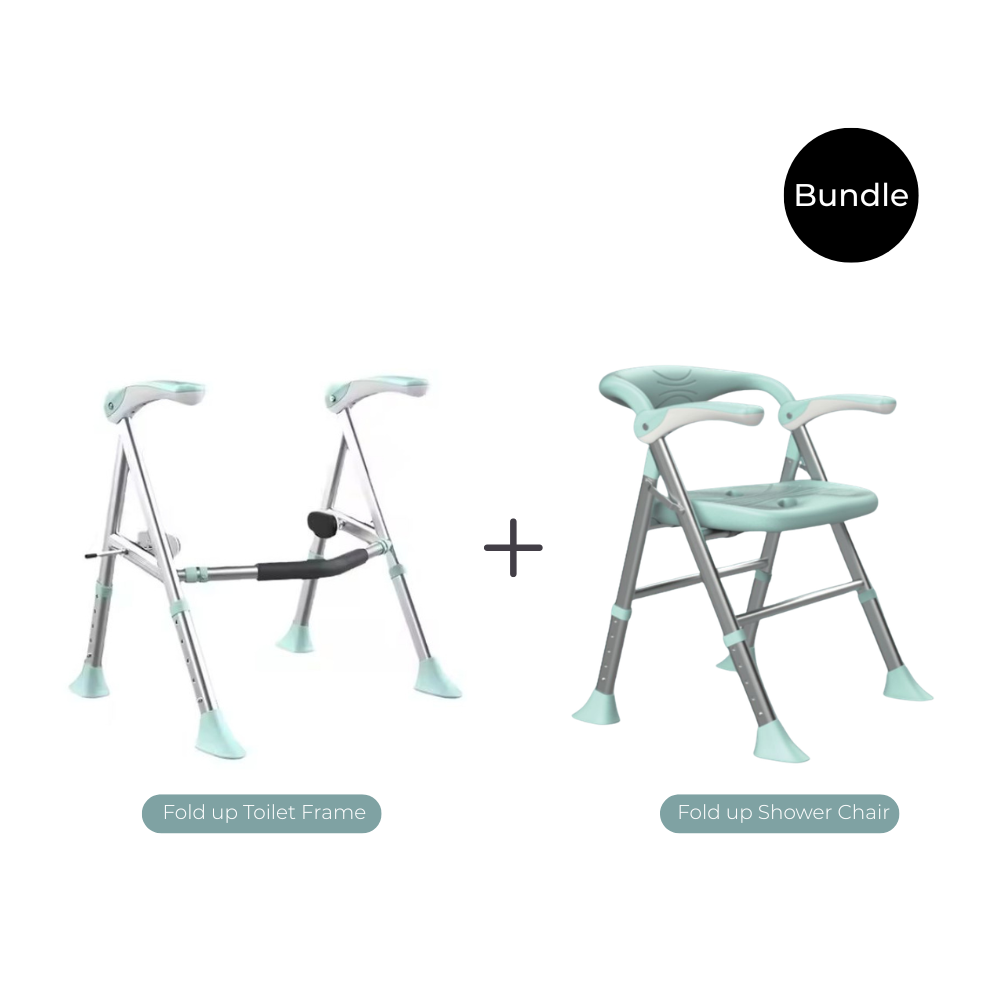
A fold-down seat or a fold-up chair takes almost no space when not in use. For example, the Avail Fold Up Shower Chair (S03C1G) folds and stores away, which suits shared bathrooms where other household members need the full floor. Wall-mounted and fold-up seats are both good space-saving answers. Freestanding and portable chairs remain Avail's most popular seating, and they suit people who want flexibility and no installation.
Carer assistance
A commode usually needs a carer to move it, position it and often to operate brakes and empty the pan. A shower chair with toilet support arms and grab rails often lets the user stay independent for longer.
That independence is not a nice extra. It changes the routine for the whole household, including how much time and physical effort a carer needs to put in each day.
Cleaning and hygiene
A commode has more parts to clean: the pan, the seat opening, the frame, the castors and the joins. It needs regular washing and thorough drying, and the frame and castors should be checked for wear.
A smooth, non-slotted shower seat is far simpler. Water runs off the tilted surface, and a wipe-down covers the lot. A real toilet, meanwhile, flushes and connects to the sewer, so there is no pan to carry and empty.
Why does bathroom equipment choice matter for falls?
Bathrooms combine wet floors, hard surfaces and awkward movements, which is why equipment choice matters. According to the Australian Institute of Health and Welfare (AIHW), falls are the leading cause of injury hospitalisation in Australia, and rates rise sharply with age. Equipment that reduces unsupported standing, turning and stepping targets the moments where falls tend to happen.
The AIHW's injury reporting is a useful reference if you need to explain the case for bathroom modifications to family, a funder or a builder. The practical lesson is simple. The riskiest moments are transfers, turning and standing up from a seat. A good setup gives the user something solid to hold or push on at each of those moments.
A commode does not remove those moments. It still needs a transfer on and off, and the carer is often managing a wheeled unit on a wet floor. A fixed or fold-down seat, a correctly placed rail and a supported toilet seat shorten the list of unsupported movements.
When is a shower chair or fold-down seat the better fit?
A shower chair or fold-down seat is the better fit when the user can stand briefly, pivot and sit with support, but tires or becomes unsteady during a full shower. It keeps the user safe while washing, keeps toileting at a proper toilet, and makes the bathroom easier to clean and share.
A carer scenario
Imagine a woman in her late seventies who lives with her adult son. She can stand and walk to the bathroom, and she can lower herself onto a seat with a rail beside her. But after a few minutes standing under the shower, her legs tire and she feels light-headed.
A commode would solve a problem she does not have. She does not need a pan, and rolling a wheeled unit into her shower would mean a bigger, more clinical setup. What she needs is a stable seat in the shower, a hand shower she can use while seated, a rail to push up from and support at the toilet. Her son can help when needed, but she keeps her routine and her privacy.
Signs a seat is the right answer
- The person can stand with support, even if only for a short time.
- They tire, feel dizzy or lose balance partway through a shower.
- They can reach and use the toilet, but need help getting up and down.
- The shower is hobbed, narrow or part of a shared household bathroom.
- The goal is to keep the person as independent as possible, for as long as possible.
Which kind of seat?
The choice between a wall-mounted fold-down seat, a fold-up chair and a freestanding chair depends on space, budget and whether you want a permanent installation. We cover that in detail in our fold-down shower seat buying guide and our wall-mounted vs freestanding guide, so we will not repeat it here. Weight ratings are covered in our shower chair weight capacity guide. Browse the Shower Seats, Chairs & Stools collection on the Avail Designs website to compare options side by side.
How do you build a combined toileting and showering setup without a commode?
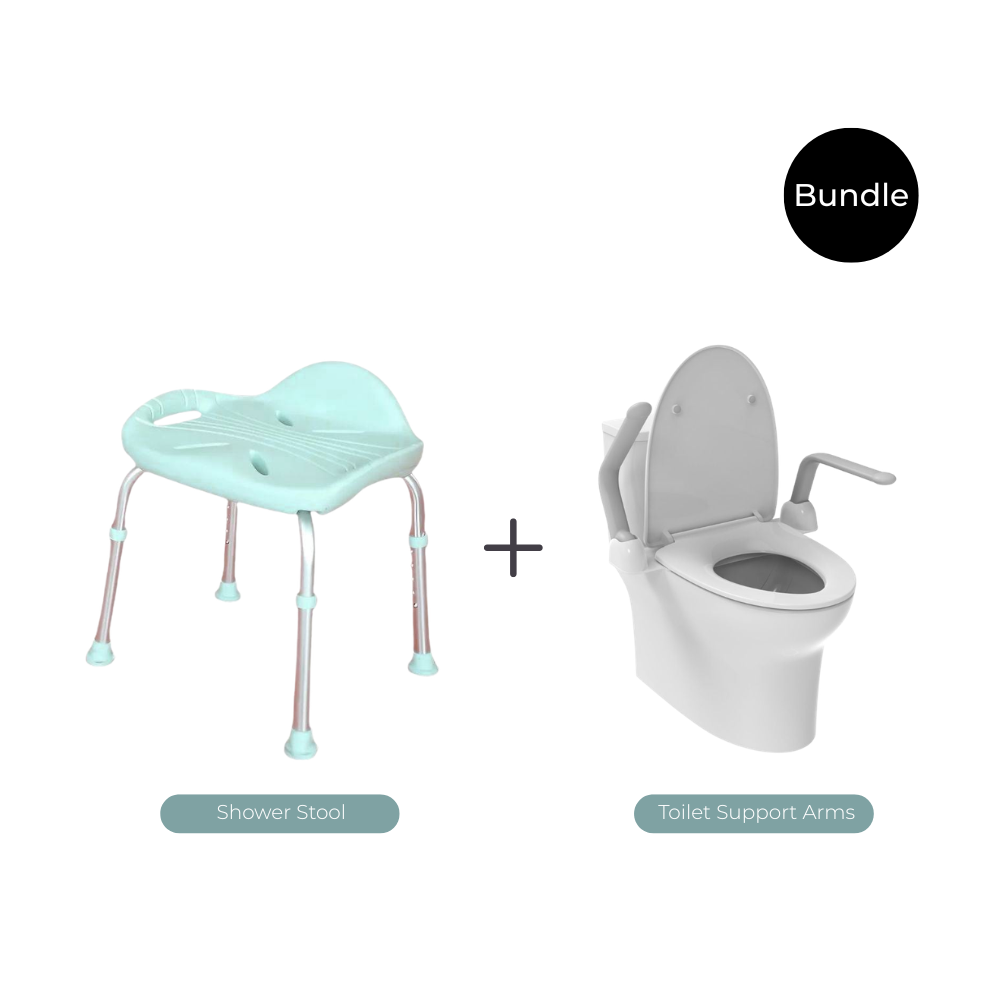
Build it from five parts: a stable shower seat, toilet support arms, a correct-height accessible toilet, well-placed grab rails and a hand shower the user can reach while seated. Together they cover every transfer in the bathroom, so the person never needs a mobile commode for day-to-day use.
Toilet support arms
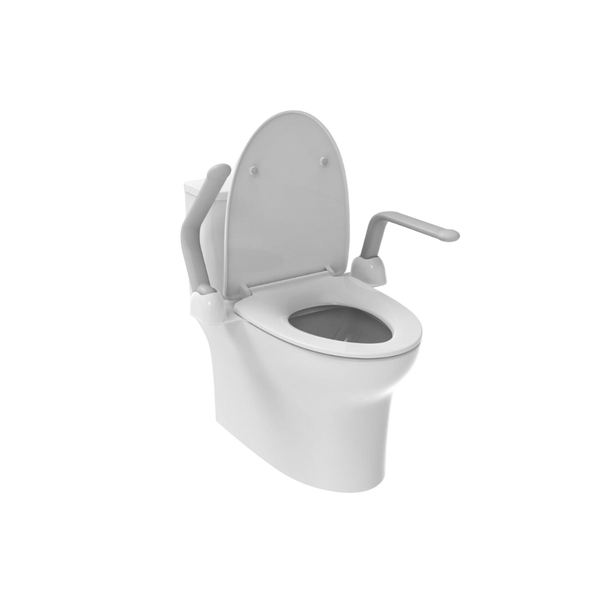
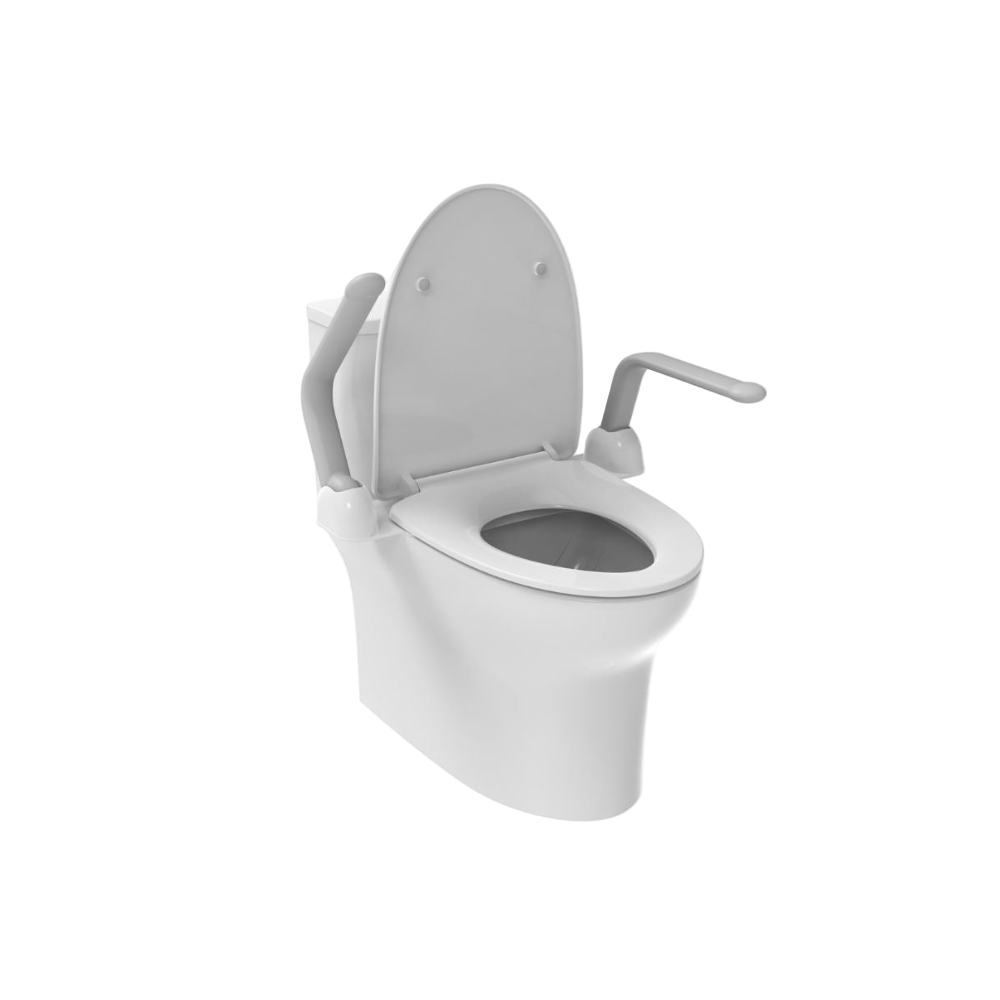
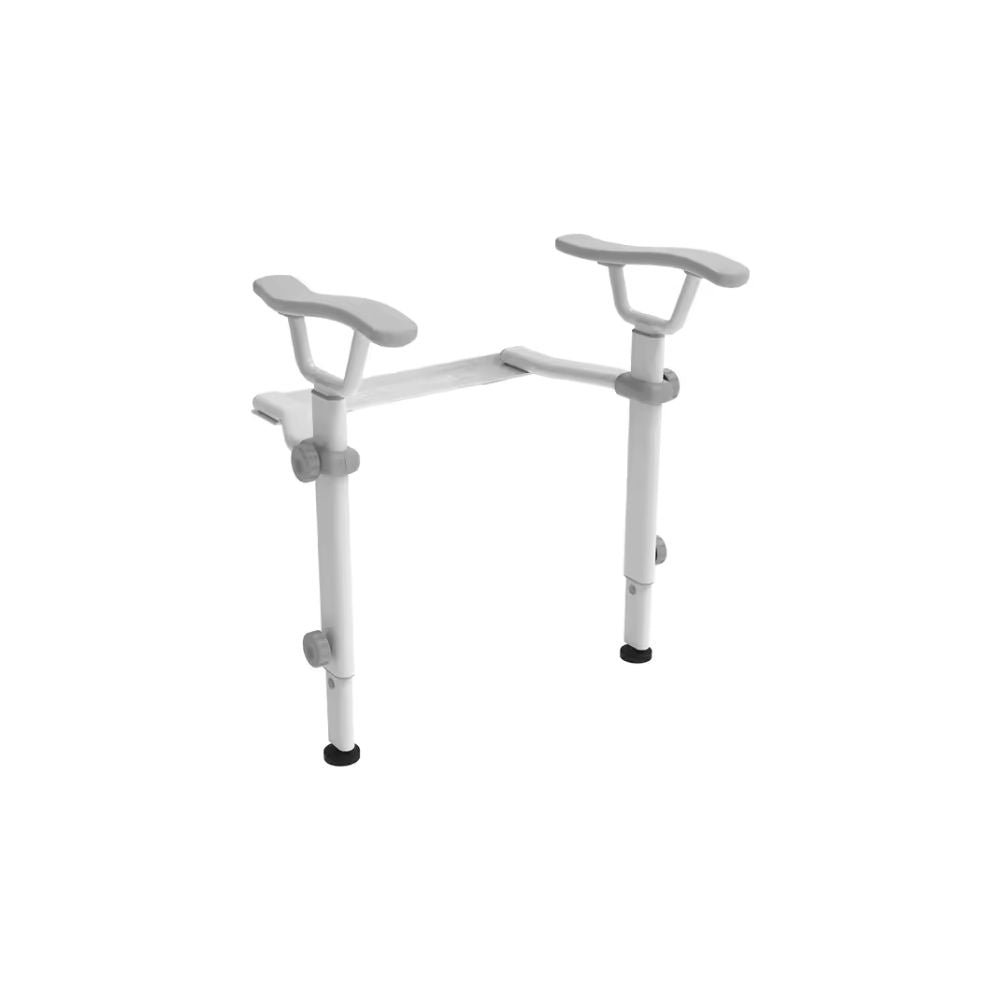
Toilet support arms give the user something solid to push up from and lower onto. They are the single biggest upgrade for people who can stand but struggle with getting on and off the toilet. Many fold up out of the way, which helps when a carer needs side access or when other people share the bathroom.
This is the product that replaces the "commode over the toilet" idea for many people. Instead of bringing a wheeled seat to the toilet, you make the toilet itself safer and more supportive. You can browse the Toilet Support Arms collection on the Avail Designs website.
Backrests and accessible toilet pans
A backrest gives trunk support and lets the user sit back without leaning on the cistern. It makes a difference for people with weak core control or fatigue.
Pan height and design also matter. A toilet that is too low demands more effort from the legs. An accessible toilet pan, designed with appropriate seat height and clearances, takes some of that load away. Back support is a standard feature of accessible toilet design for this reason. Our Accessible Toilets range covers pans designed for this purpose.
Grab rails
Grab rails give the user a reliable handhold at each transfer point: entering the shower, rising from the seat, and getting on and off the toilet. Placement matters as much as the rail itself. Under AS 1428.1, grab rail mounting height is 800mm to 820mm above the finished floor, and the standard sets out other layout requirements. We link to the existing guides on this rather than repeat them. See the Grab Rails collection for options.
Slider showers and hand shower placement
A slider rail with a hand shower lets someone wash while seated, without reaching or standing up. Mount it so the user can reach the hand shower and the controls without leaning off the seat. Our accessible hand shower placement guide covers exactly where to position it.
Putting it together
Here is the typical order we suggest when planning a bathroom:
- Confirm what the user can do, ideally with an OT.
- Fix the toilet: correct pan height, support arms and a backrest if needed.
- Add grab rails at the toilet, shower entry and seat.
- Choose the shower seat that suits the space (wall-mounted, fold-up or freestanding).
- Place the hand shower on a slider rail within easy seated reach.
- Check the floor is slip-resistant and the entry is as step-free as the building allows.
If you want help specifying all of this as one system, the Avail Designs team can help you match the products to the user's mobility.
When is a commode the right call, and why does an OT assessment matter?
A commode is the right call when the person cannot transfer safely using their own strength, when toileting happens mostly in the bedroom, or when care needs are high. In those cases, an occupational therapist (OT) assessment should guide the choice, because the wrong equipment can create new risks.
Situations where a commode genuinely fits
We do not pretend a seat and rails solve everything. A commode, or a similar piece of prescribed equipment, may be the better answer when:
- The person needs to move from bed to bathroom without standing, for example with a wheeled chair transfer.
- They cannot hold their own weight, even briefly, and use a lift or sling.
- Toileting is urgent or frequent, and the bathroom is a long way from the bed.
- The bathroom cannot be changed to allow safe toilet access.
- Two carers or specialist handling techniques are already part of daily care.
In these situations, a wheeled shower commode can offer practical benefits, particularly for people who are cared for in a single, controlled routine from bed to bathroom.
Why see an OT first
An OT assesses the person, the bathroom and the carer together. They look at posture, strength, cognition, transfer technique, the room layout and the person's goals. They then recommend equipment that fits, and they can say whether the setup needs to change over time as needs change.
That matters because commodes and shower seats are not interchangeable. A product that is perfect for one person can be unsafe for another. If funding is involved, such as through a government support program, an OT's recommendation is often needed as part of the process. Occupational Therapy Australia lists how to find an OT in your area.
Where Avail fits if a commode is recommended
Avail Designs does not sell commodes, so we will not suggest one product over another. What we can do is help with the bathroom around it: the shower seating, grab rails and toilet support products that suit the rest of the household, and the ones that will keep working if the person's needs change. For many households, the commode is a short-term or night-time answer, while the bathroom is set up for the longer term.
Shower commode vs shower chair: quick comparison
This table compares the two options across mobility, space, hygiene, permanence and long-term ownership. It is qualitative on purpose, because the right answer depends on the person, not a number.
| Factor | Shower commode | Shower chair or fold-down seat with toilet support |
|---|---|---|
| Mobility needed | Suits people who cannot stand or transfer on their own | Suits people who can stand, pivot or sit with support |
| Space needed | Needs turning room and a step-free entry | Works in tighter bathrooms, especially fold-up and fold-down options |
| Hygiene | More parts to clean, including pan, frame and castors | Smooth, tilted, non-slotted seat wipes down quickly |
| Permanence | Mobile and removable, can move between rooms | Wall-mounted for permanent use, or fold-up and portable for flexibility |
| Toileting | Done on the commode, pan emptied by a carer | Done on a proper toilet with arms, rails and backrest |
| Independence | Usually needs a carer to position and push | Often allows independent or lightly supported use |
| Long-term ownership | May become unnecessary if mobility improves, or essential if it declines | Keeps working across a wide range of mobility levels |
| Funding and advice | OT assessment strongly recommended | OT advice helpful, especially for complex needs |
How do you keep each setup clean and safe over time?
Clean after each use with a mild detergent, rinse, and dry. Check fixings, castors and seat surfaces regularly. A shower seat with a smooth, tilted, non-slotted surface is faster to clean than a commode, which has a pan, frame joins and castors that need extra attention.
Caring for a shower chair or seat
- Wipe down after showering. Water drains off a tilted, non-slotted seat, so there is little to trap.
- Clean with a mild detergent and rinse well. Avoid abrasive pads that scratch the surface.
- Check wall fixings, hinges and folding mechanisms periodically for looseness.
- Make sure the floor beneath a freestanding or portable chair is clean and slip-resistant.
Caring for a commode
- Empty and rinse the pan promptly, then clean it with a suitable disinfectant.
- Wash the seat, frame and castors, and dry them thoroughly after each shower use.
- Check brakes, castors and the frame for wear. A commode that rolls when it should not is a serious risk.
- Follow the manufacturer's cleaning instructions, since some detergents damage coatings.
Safe use basics
Whichever you choose, lock any brakes before the user transfers. Position the equipment close to the shower controls and rails. Test the water temperature before the user sits, and never leave a person at high risk of falling alone in the bathroom. If you are not sure, ask an OT to watch a real transfer and adjust the setup.
Why we think most households should split the job in two
My position is simple. For people who can still transfer, one product that tries to do both jobs is usually the wrong goal. Showering and toileting have different needs, and a bathroom works better when each is solved properly.
A commode feels like a tidy answer because it is one purchase that appears to cover everything. But it carries the toileting routine into the shower, adds a wheeled unit to a wet floor and keeps the carer involved at every step. For someone who could do much of it themselves with the right support, that is a step toward dependence, not independence.
A better approach is to treat toileting and showering as two separate transfers, each with its own support. Put toilet support arms and a backrest where the person toilets. Put a seat and rails where they shower. The household ends up with a bathroom that looks and works like a bathroom, and the person keeps the dignity of using a real toilet.
There is also a long-term argument. Needs change. Someone who needs a commode today may recover strength, and someone who is independent today may need more help in two years. Fixed supports, such as rails, toilet arms and a wall-mounted or fold-up seat, keep doing their job across that range. A commode only suits one end of it.
That said, this is a judgement for each household, not a rule. If bed-to-bathroom transfers are the main challenge, or care is high, a commode may be exactly right. The point is to choose it deliberately, with an OT, rather than because it looked like the one-product answer in a search result.
Where should you start?
Start by confirming what the user can do now, ideally with an OT. Then choose the toilet supports, rails and seat that match. If the person can stand and pivot, begin with toilet support arms and a shower seat. If they cannot, get an OT assessment before buying any equipment.
The Avail Designs team can help you specify a combined showering and toileting setup that suits the user's mobility. You can browse our shower seats and toilet support arms, or contact the team with your bathroom layout and the user's needs, and we will help you work through the options.